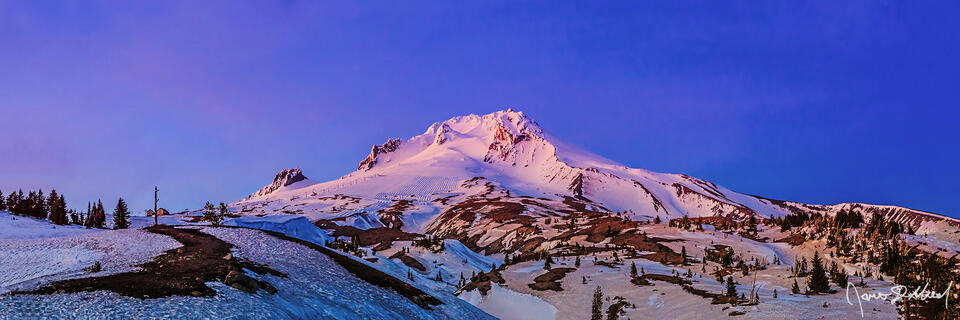
Mount Hood Fine Art Landscape Photography: a Decades Long Journey across All Four Seasons
If you’re a lifelong Oregonian like I am, Mount Hood was one of your first outdoor loves. It’s not just a mountain; it’s an icon. I’ve been visiting Mount Hood my entire life, and it's been my backdrop for over 46 years. I’ve spent over four decades documenting Mount Hood and its shifts, from my earliest memories as a young child to a professional fine art residency spanning 20 years. This gallery and archive encompasses a native Oregonian's perspective, captured with the intimacy only a lifelong resident can provide.
I've spent a lot of time up in the various mountain ranges across the western United States over my two-decade professional career. I have seen a vast array of alpine beauty, but Mount Hood remains one of the most photogenic peaks I’ve ever laid eyes on. Hood is beautiful from any angle, and there’s nothing quite like seeing its snow capped peaks rising up high above the forests, meadows, and reflective lakes below.
The History and Cultural Heart of the Cascades
Standing as the crown jewel of the Oregon Cascades, Mount Hood (Wy’east) is more than just a volcanic peak; it is a landscape of profound historical and cultural significance. Known as Wy'east by the Multnomah, Molala (often spelled Molalla), and Clackamas tribes, Mount Hood's jagged profile first began to appear over 500,000 years ago. It has been a sentinel for the region for as long as humans have inhabited the Pacific Northwest. From its origins as a high point for the pioneers of the Oregon Trail to its status as a global destination for alpine enthusiasts, Mount Hood carries a narrative that is deeply intertwined with the identity of the Pacific Northwest. Simply put, it is one of Oregon’s most famous landmarks.
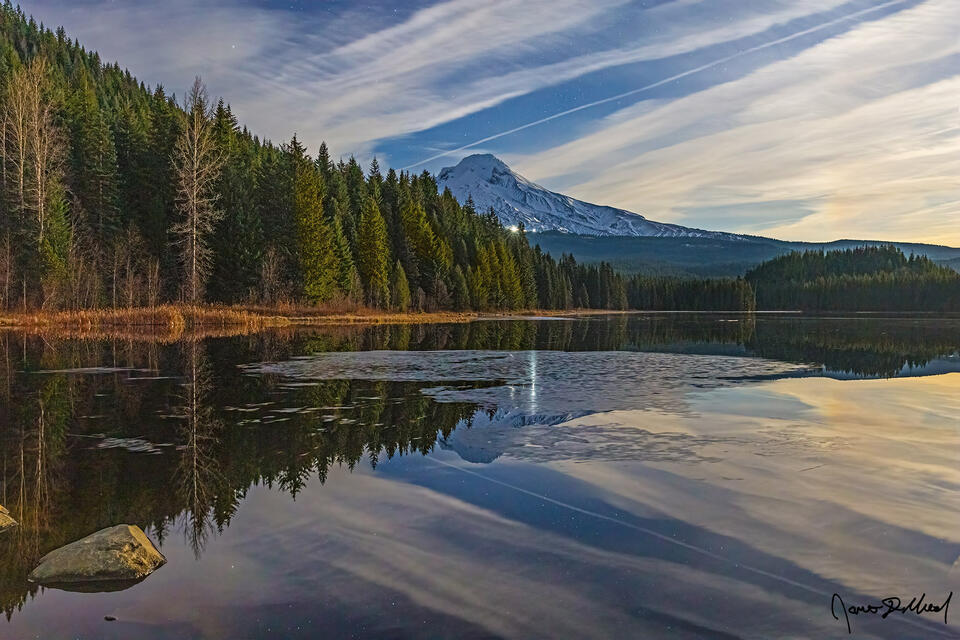
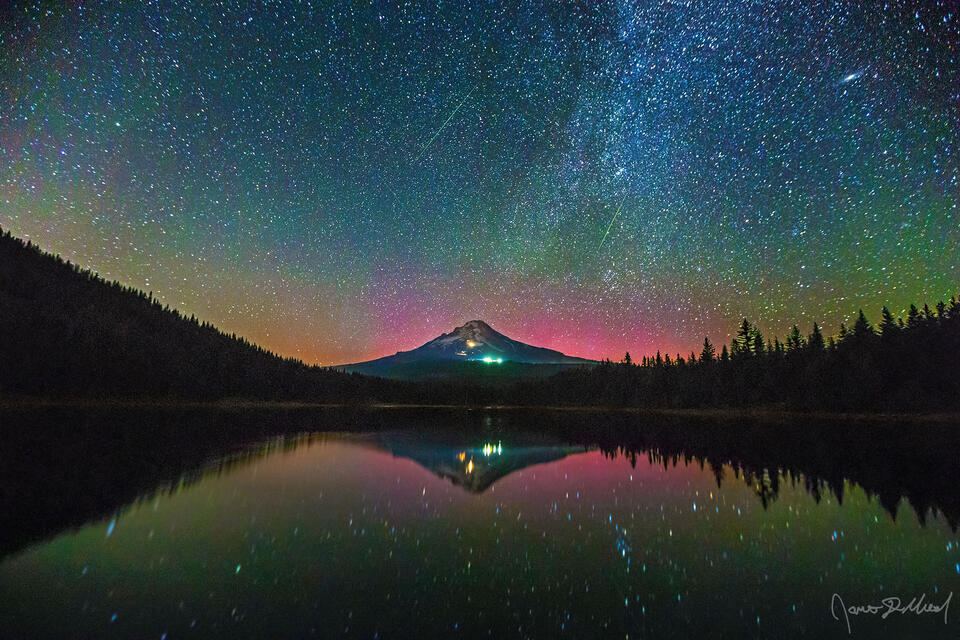
Mount Hood is the tallest mountain in the State of Oregon at 11,249 feet. It's home to 12 named glaciers and permanent snowfields, making it the most glaciated peak in the state of Oregon. For well over 100 years, there has been a movement to turn Mount Hood into a National Park. The earliest movement began in 1888, when the Oregon Alpine Club took preliminary steps towards National Park status. In 1916, an Oregon Senator authorized a bill to create the National Park, but it stalled out, as did efforts to do the same in the 1920s and 1930s. While these efforts have lacked traction in the century since, the mountain remains the heart and soul of the Cascade Range for those of us who call this region home. Its towering presence is visible from Portland (Oregon’s largest city) to Hood River and far into the eastern plateau. On calm days, the waters of Trillium Lake, Mirror Lake, Frog Lake and Lost Lake can create picture perfect reflections of the peak and surrounding forests.
Changing Seasons on Mount Hood
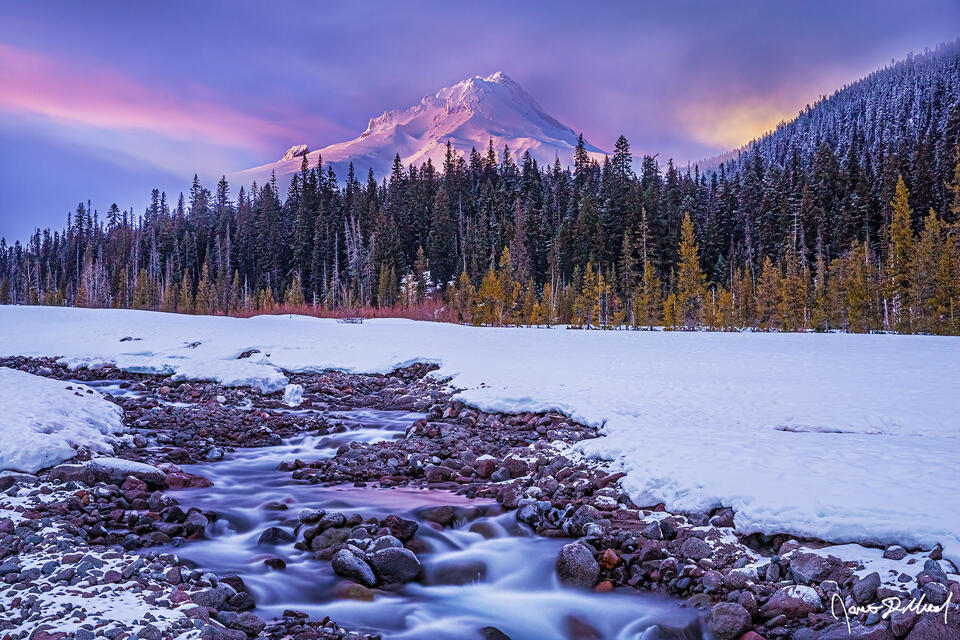
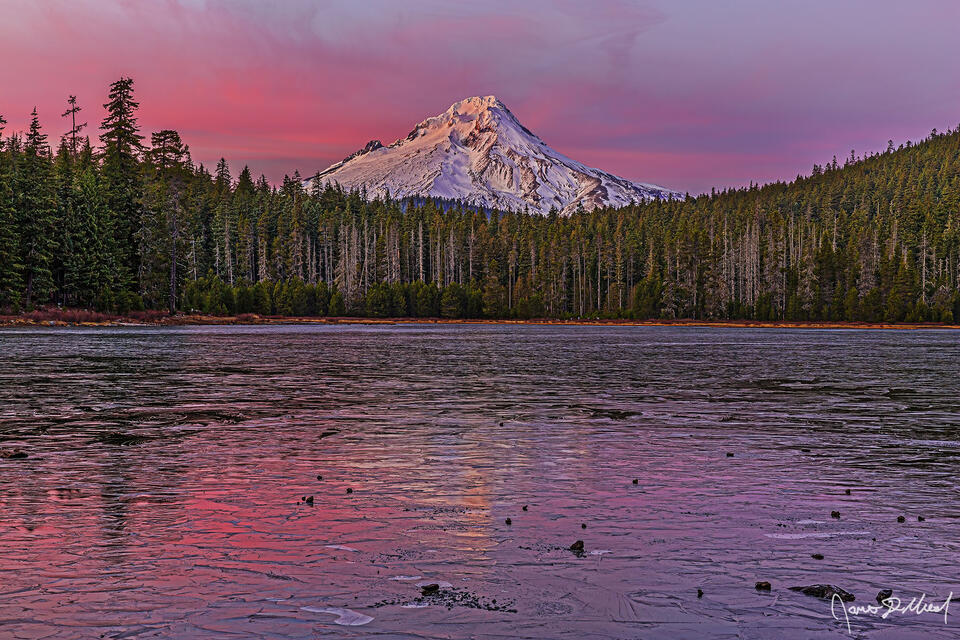
In the springtime, the snowmelt on the glaciers high above brings the rivers and waterfalls to life. Lakes begin to thaw as the season transitions, as the reflections long locked under winter ice make their first appearance of the year. In the summertime, subalpine meadows, subalpine lakes and alpine lakes come alive as the mountain rises above like a sentinel standing watch over its domain. Summertime alpenglow on Mount Hood can be particularly intense, a magical sight of deep magenta and orange that will always be remembered by all who witness its grandeur. In the fall, the air turns crisp, subtle autumn colors emerge among the extensive evergreen forests. If the conditions are right, the cold air creates stunning pastel gradients at sunset.
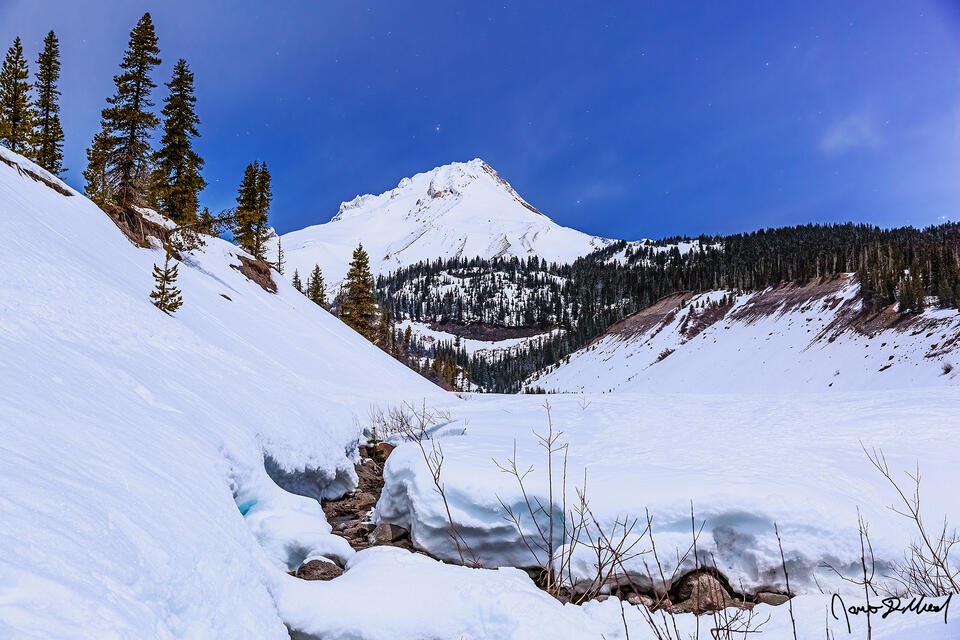
In the wintertime, the entire area transforms into an ethereal wonderland of snow and ice. Traversing the vast snowfields of Mount Hood has always been a favorite past time of mine. There’s a peaceful serenity to be found up here any time of year, but in the winter, equipped with snowshoes and crampons it’s especially stunning. The entire area is a throwback in time;, an alpine world almost too perfect for reality.
A Lifelong Residency and Fine Art Journey
My journey with Mount Hood began over 40 years ago, where my earliest memories involve winter trips to the mountain to slide the slopes on an inner tube near the Mazama Lodge. Having lived within 60 minutes of the mountain my entire life, I explored its wonders in every season with my parents, witnessing its evolution firsthand.
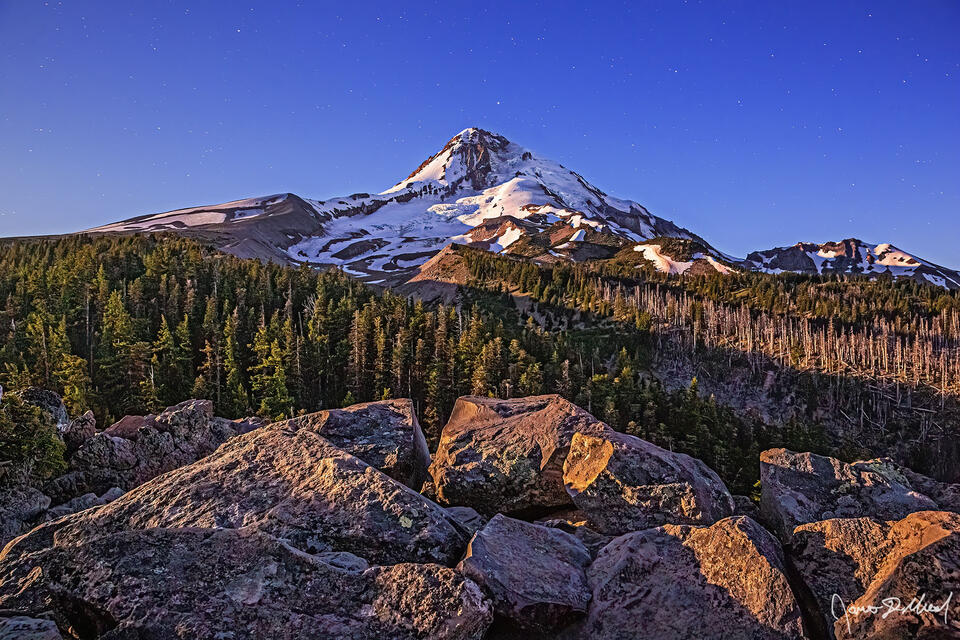
Over the decades, I have documented every angle of the mountain firsthand, from the reflective mirrors of Trillium Lake to the rugged, high-elevation vistas of Cloud Cap and the Eliot Glacier. This collection is a dedicated study of a mountain I know intimately as a local, captured with the archival precision that over 40 years of exploration and 20 years of technical evolution as a professional fine art landscape photographer provide.
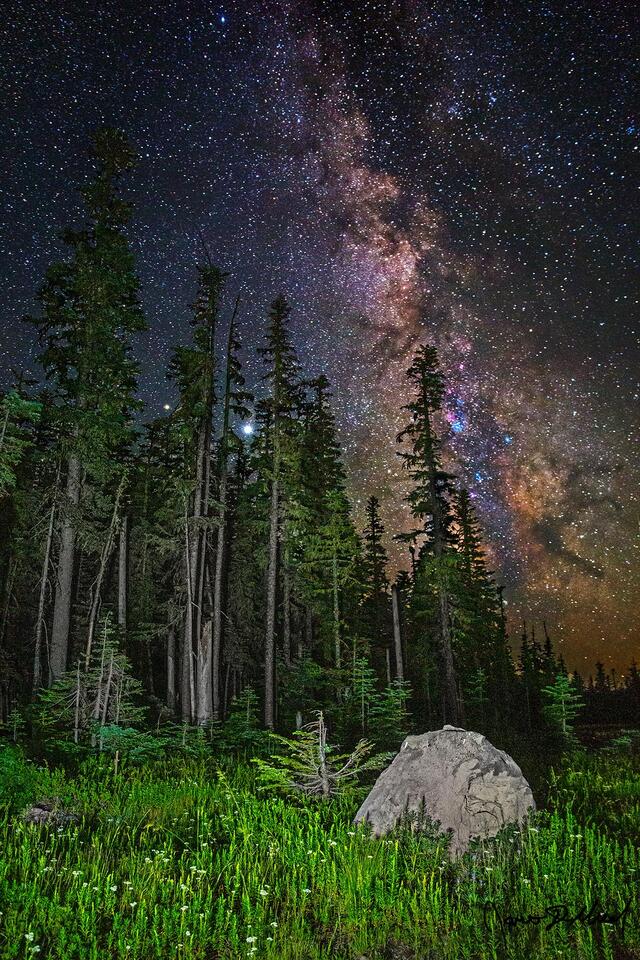
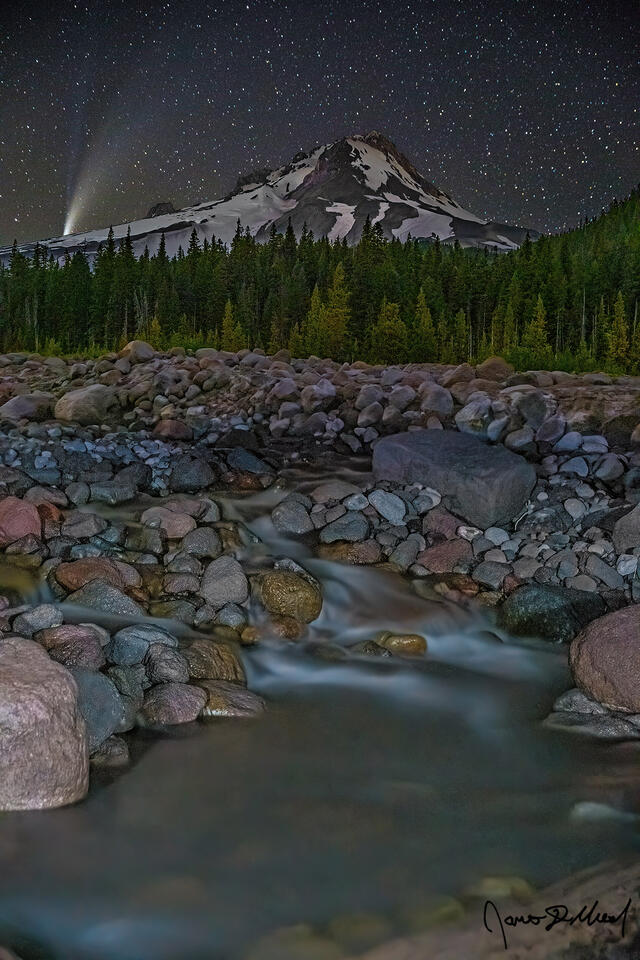
I’ve explored and photographed everything at Mount Hood over the decades, from foggy sunrises to stunning sunsets reflected in mirror like water. From cold winter snow scenes, to the Milky Way and the Aurora Borealis dazzling overhead as it dances across the sky. Each time, Mount Hood leaves me breathless as I take in its otherworldly tranquility.
There’s a reason I’ve spent my entire life coming here, and there’s a reason I continue to do so. In a world where places such as this are becoming rarer, I hope this gallery allows you to experience the same feelings of peace and wonder I have cherished for decades.