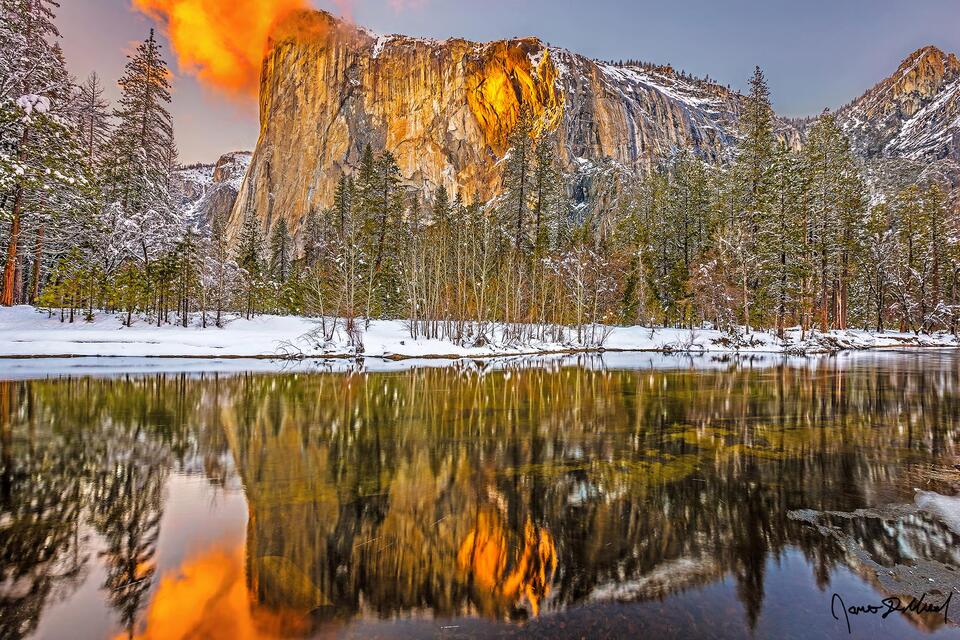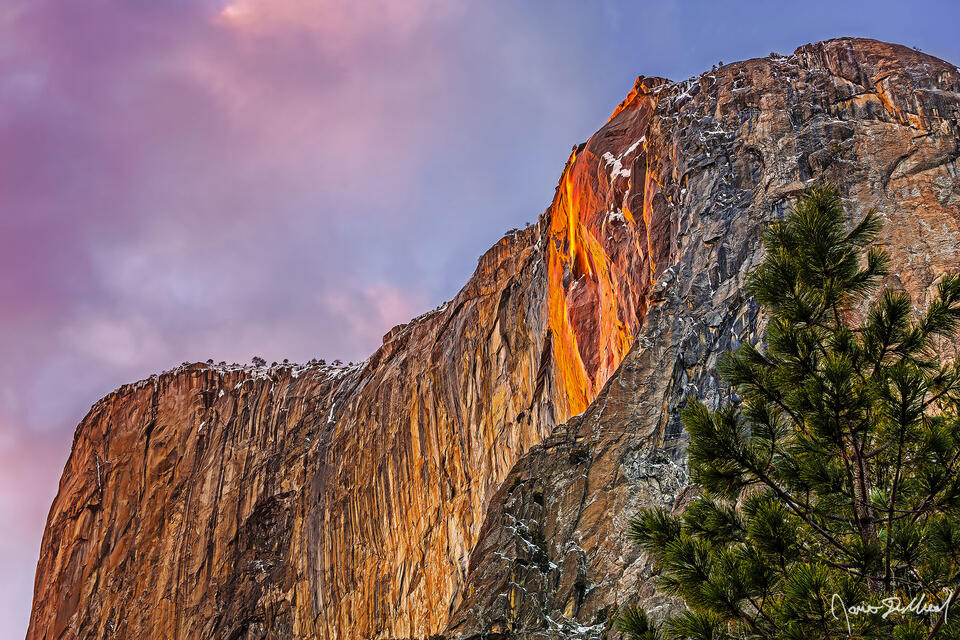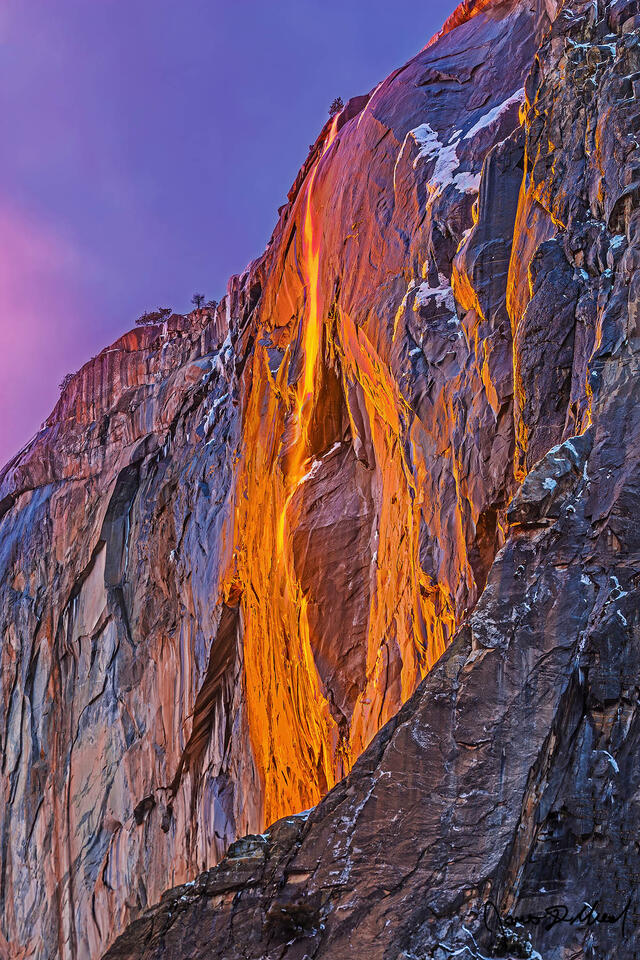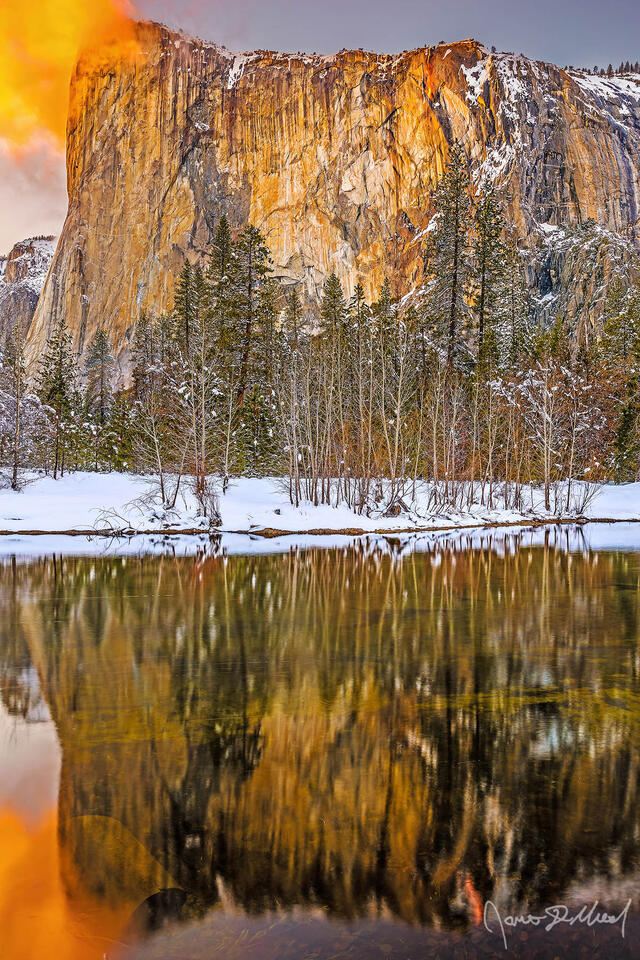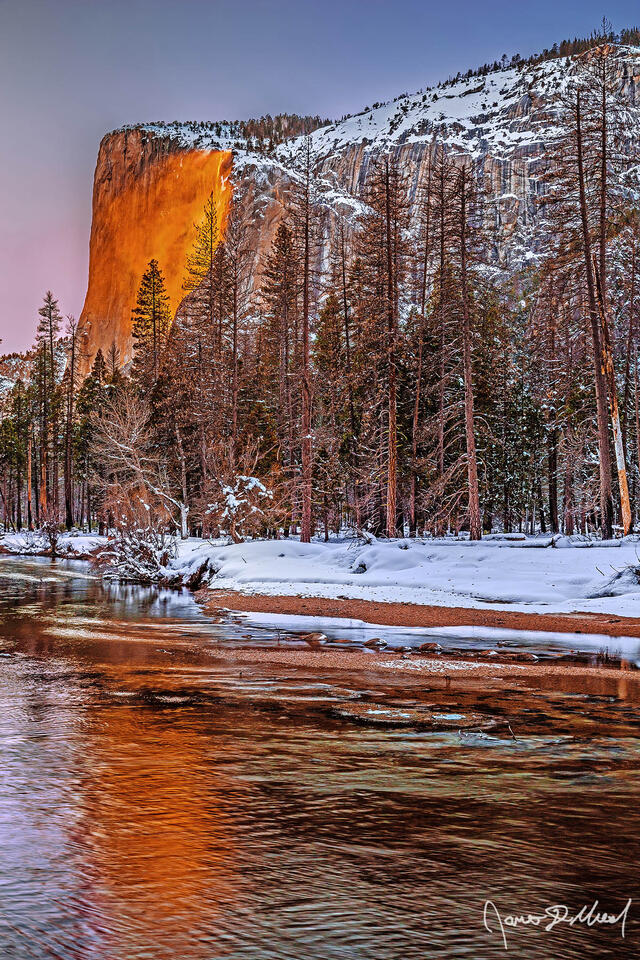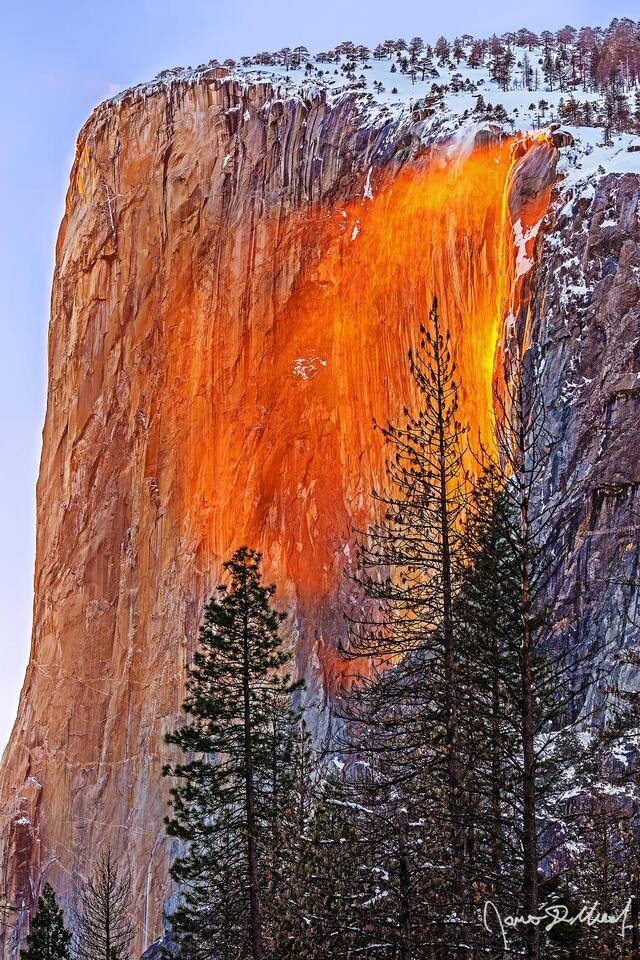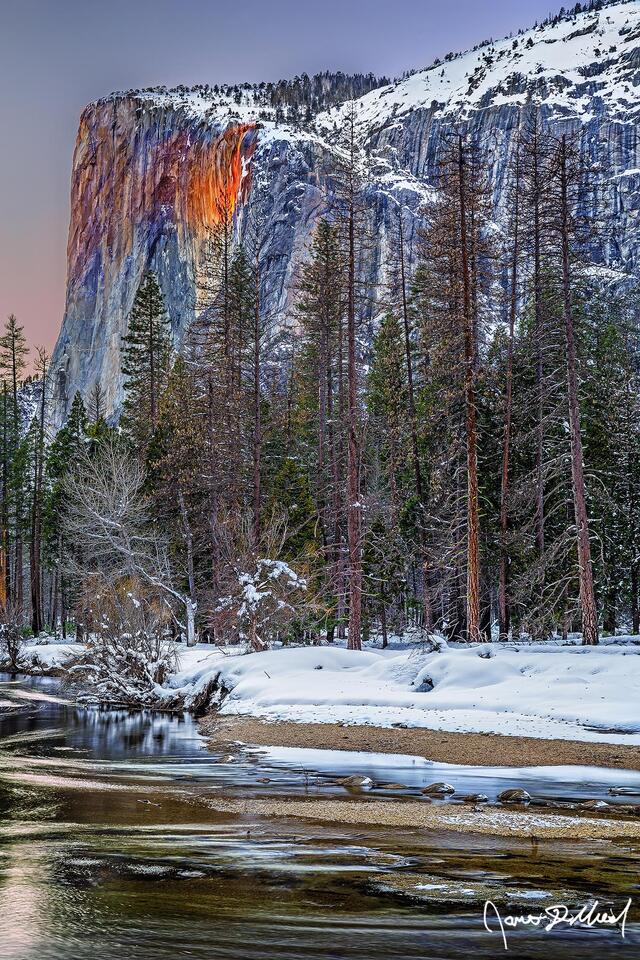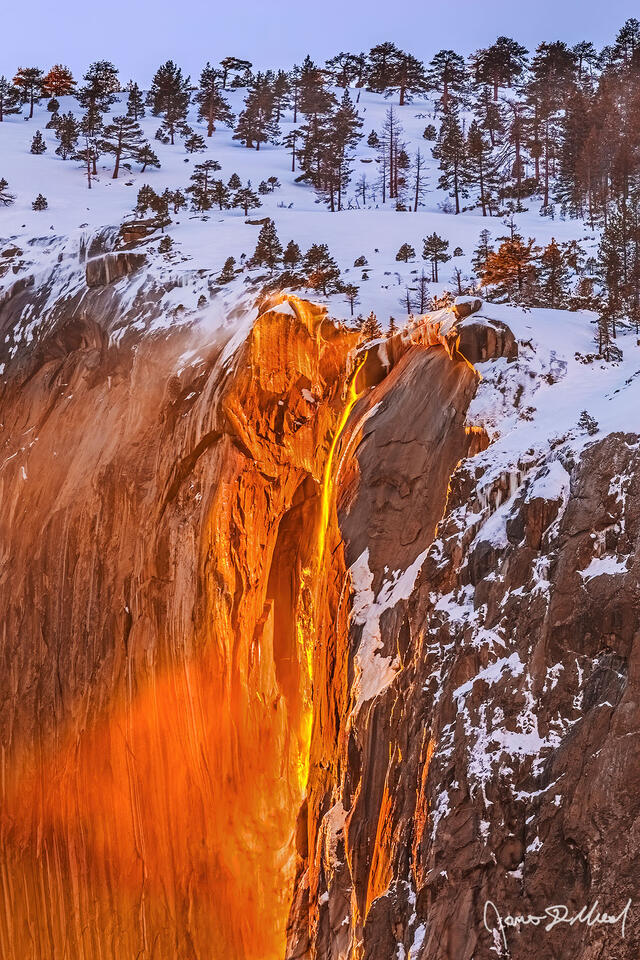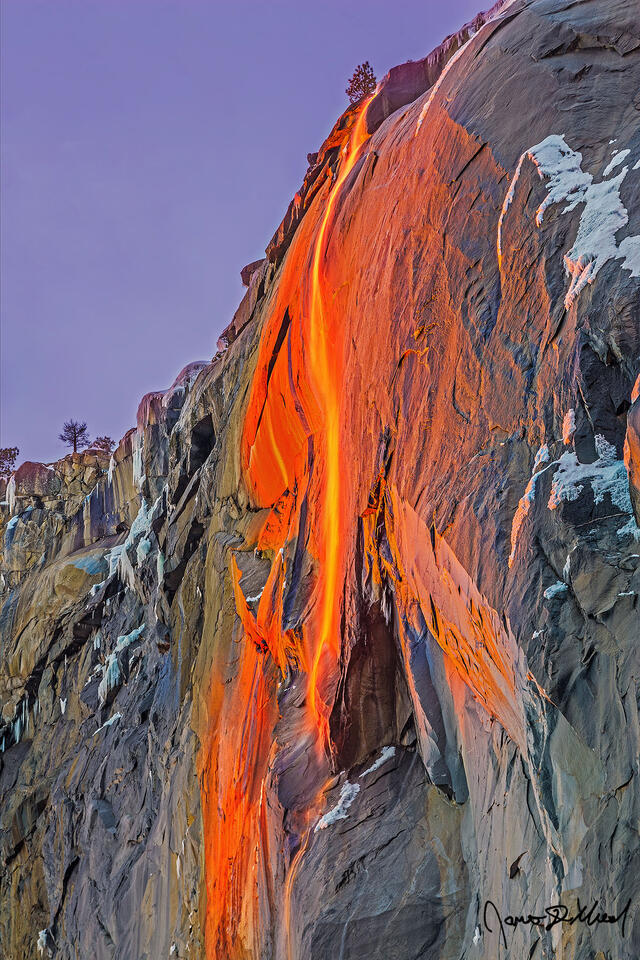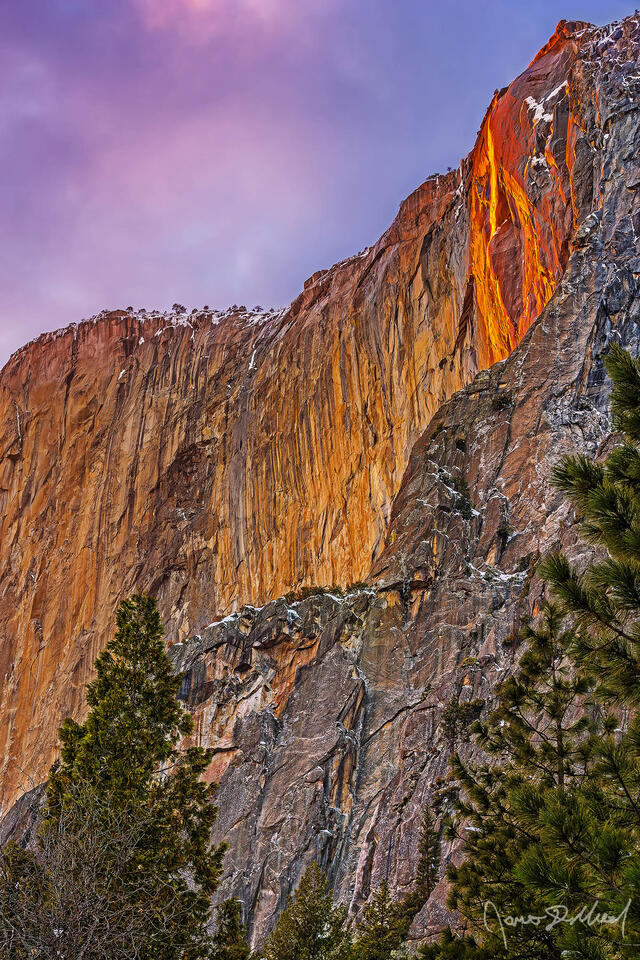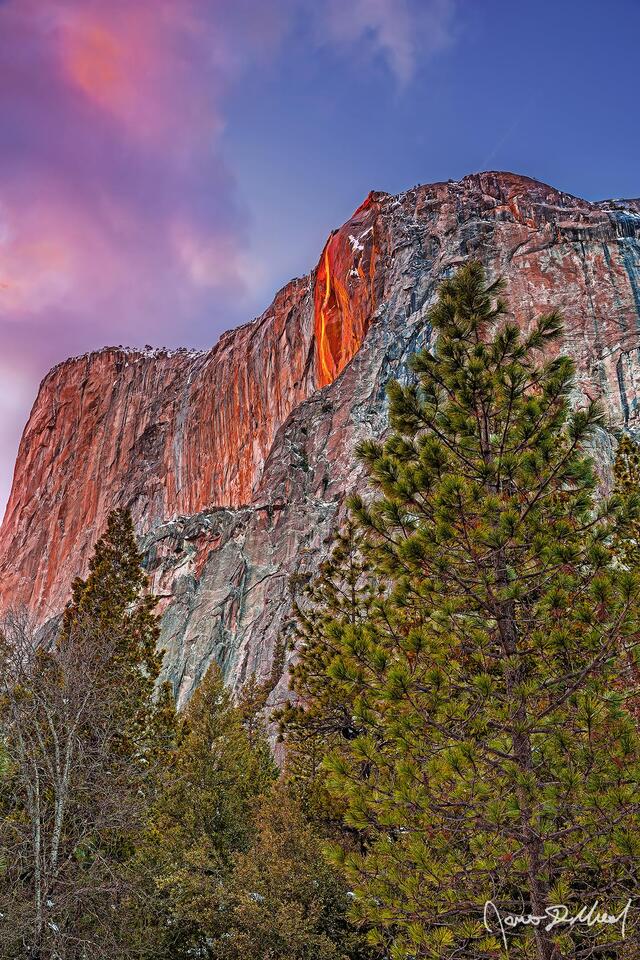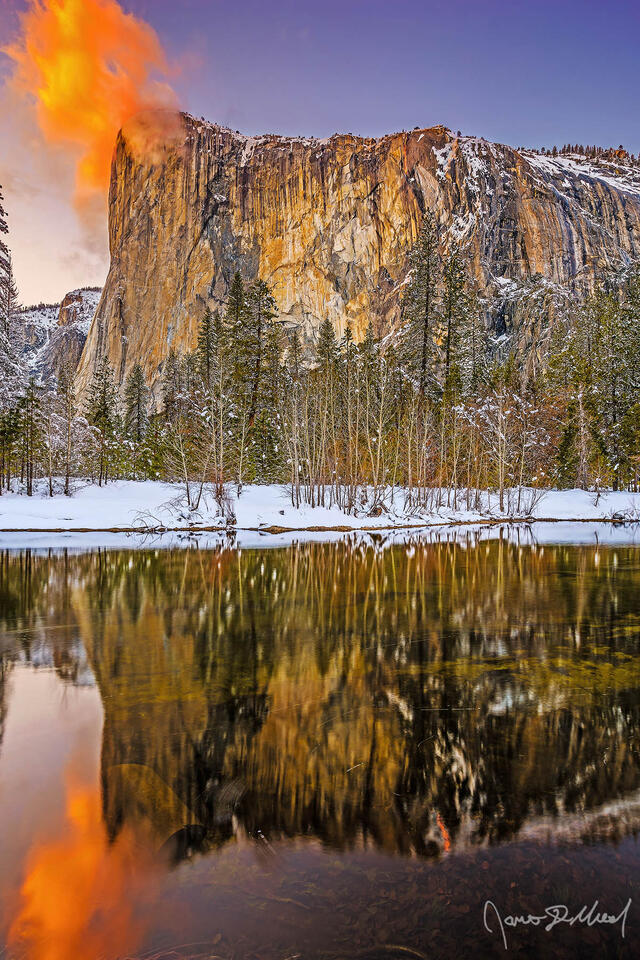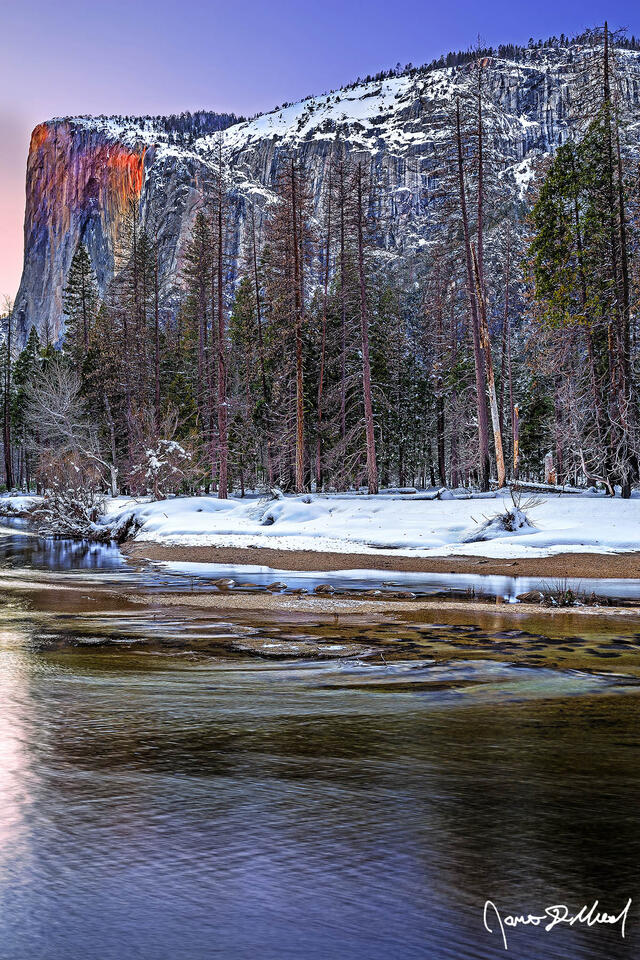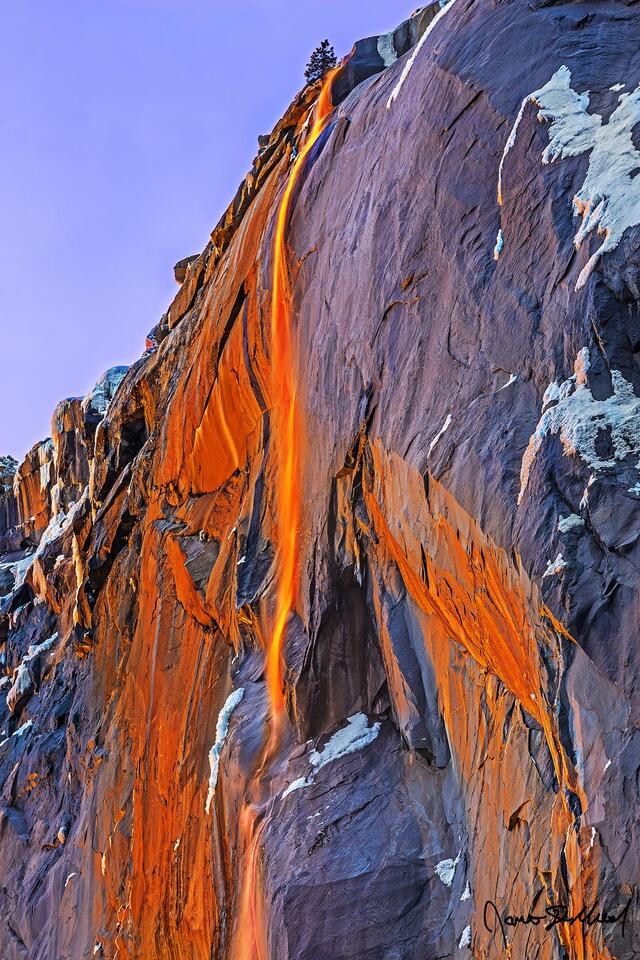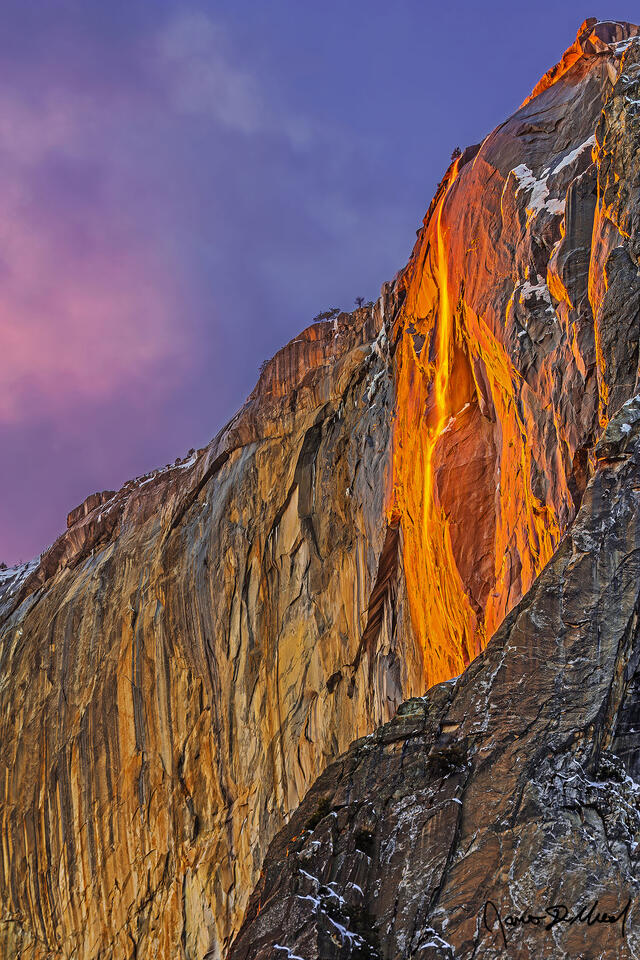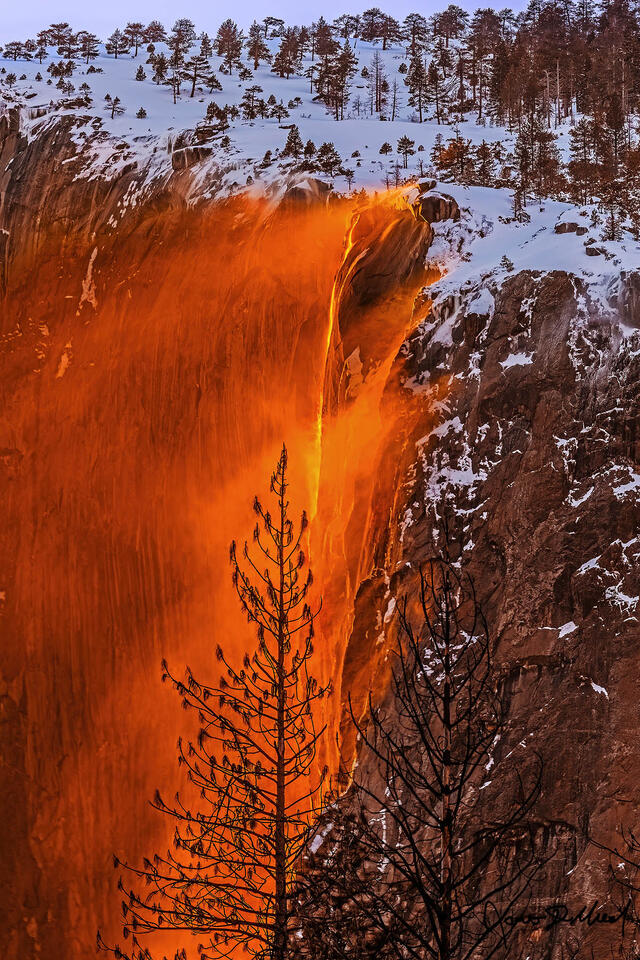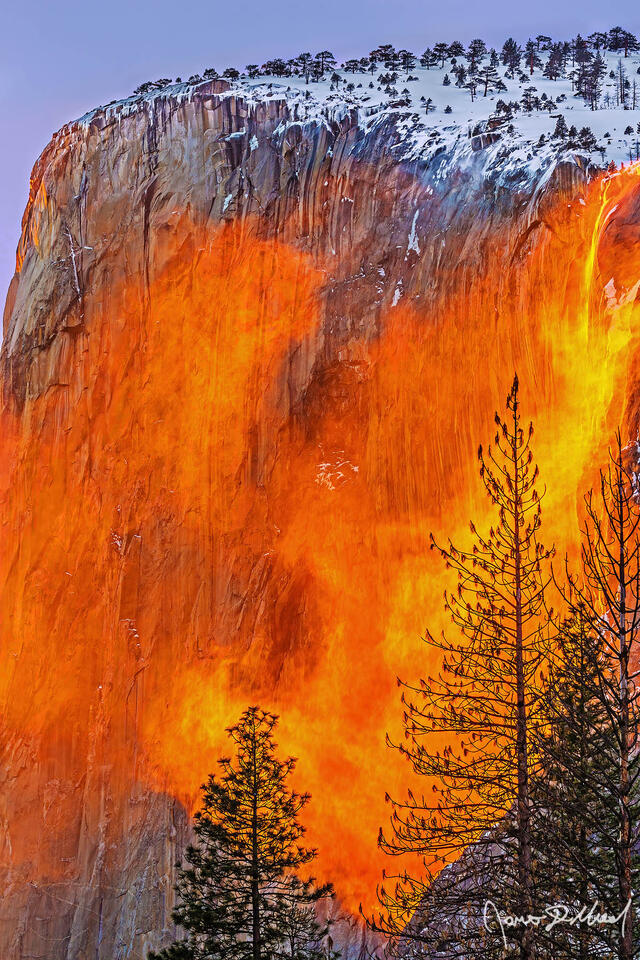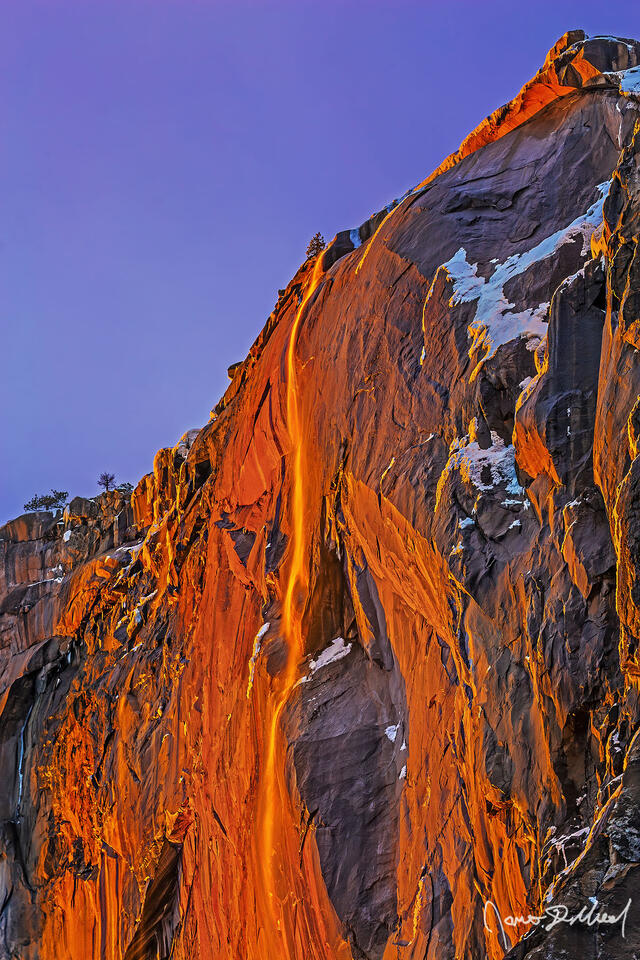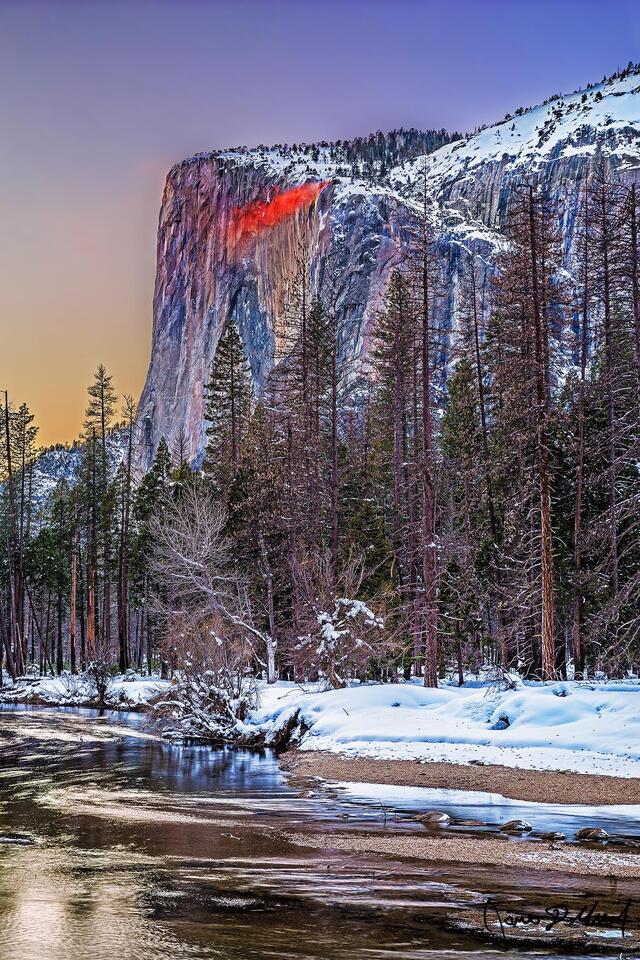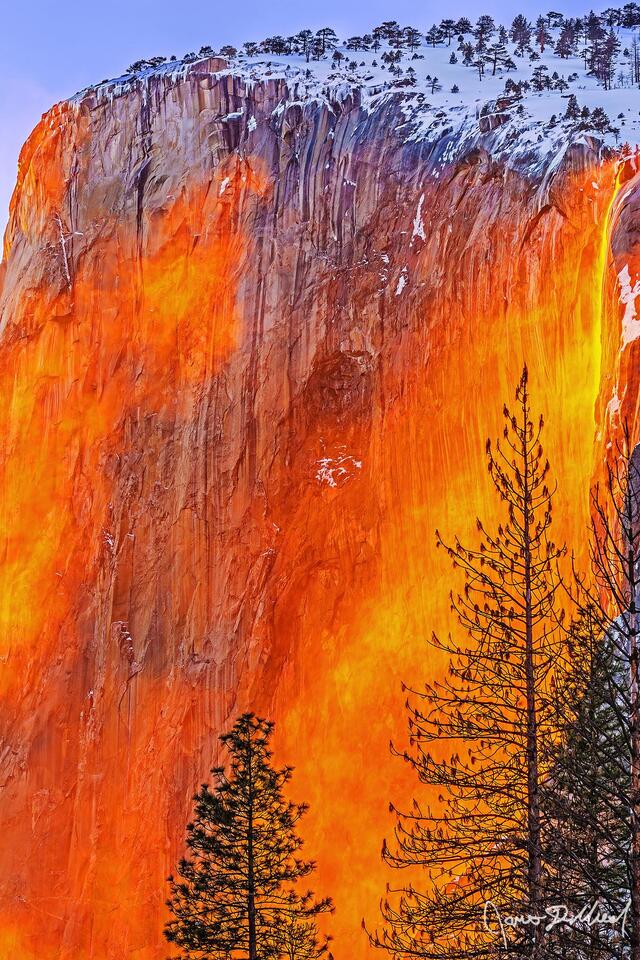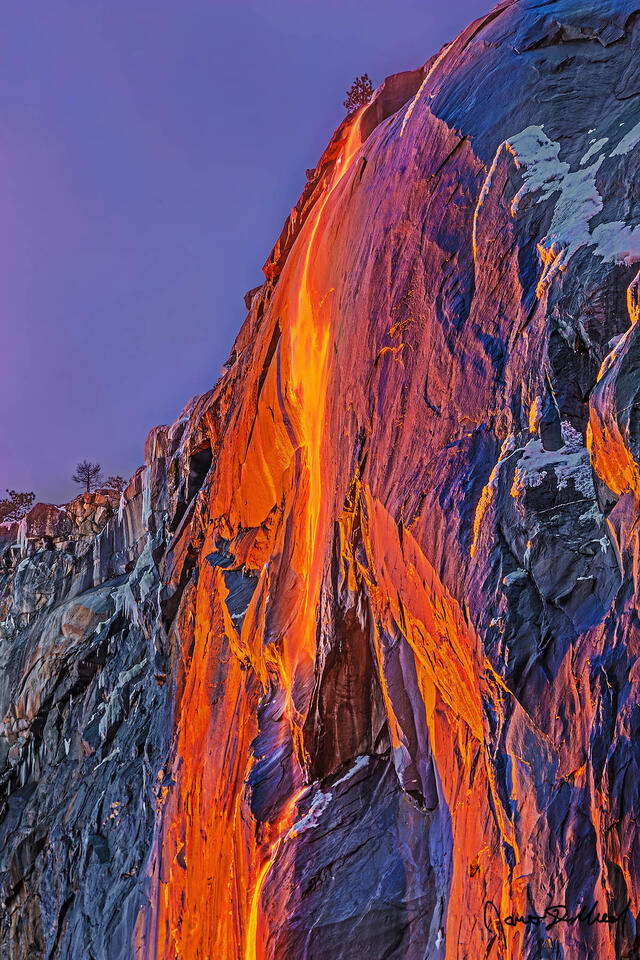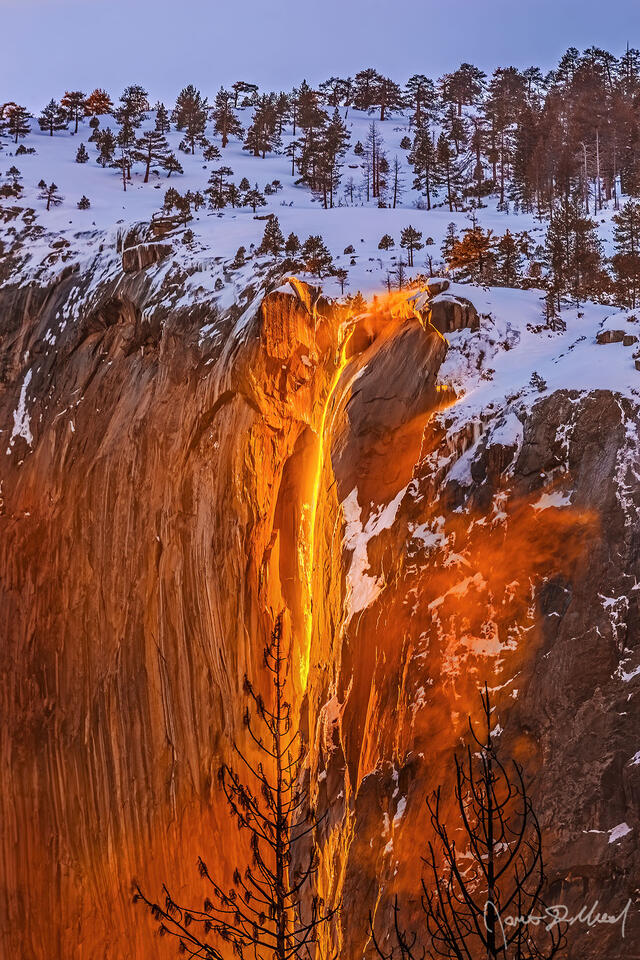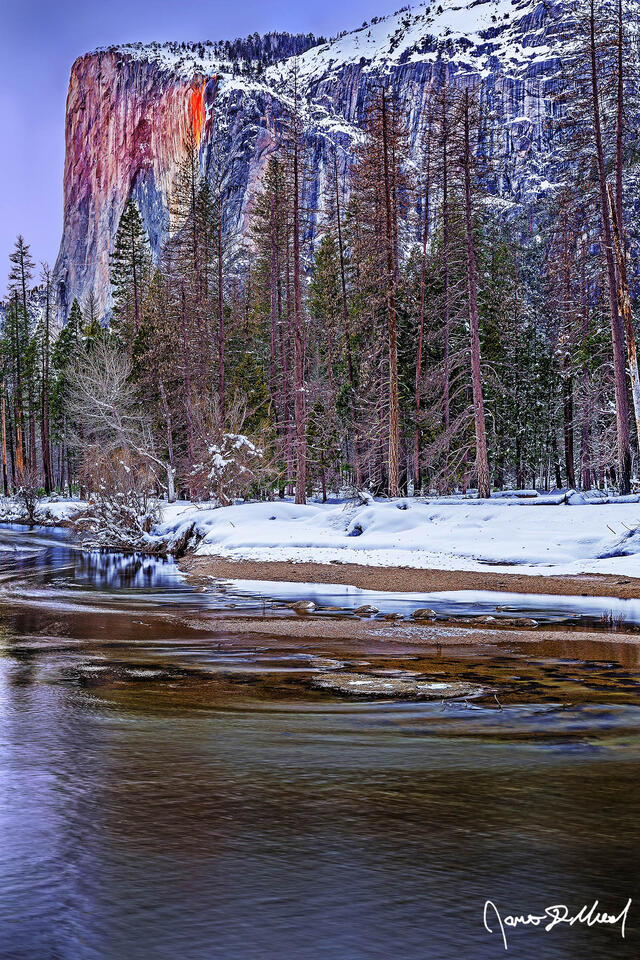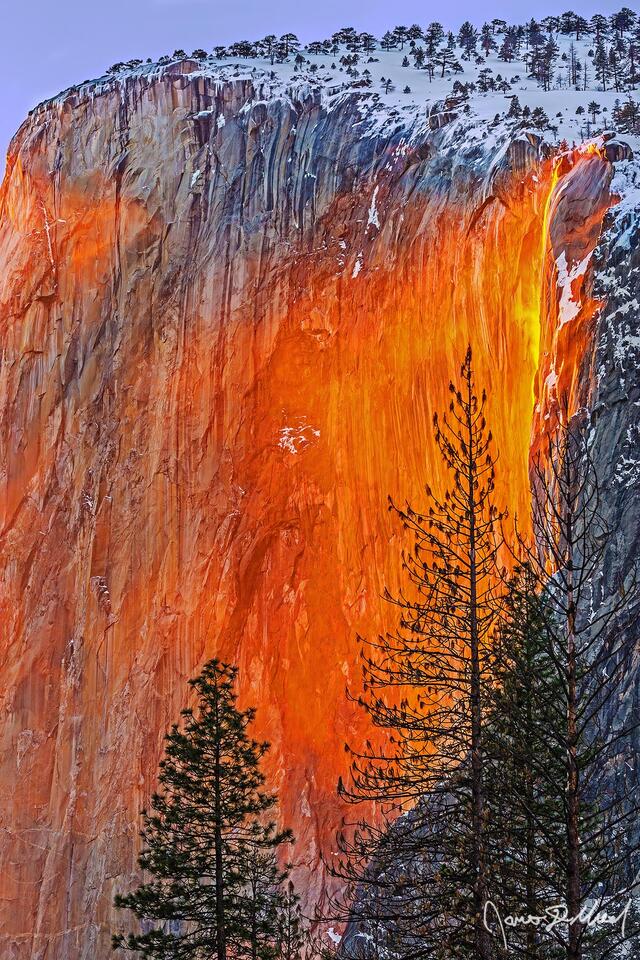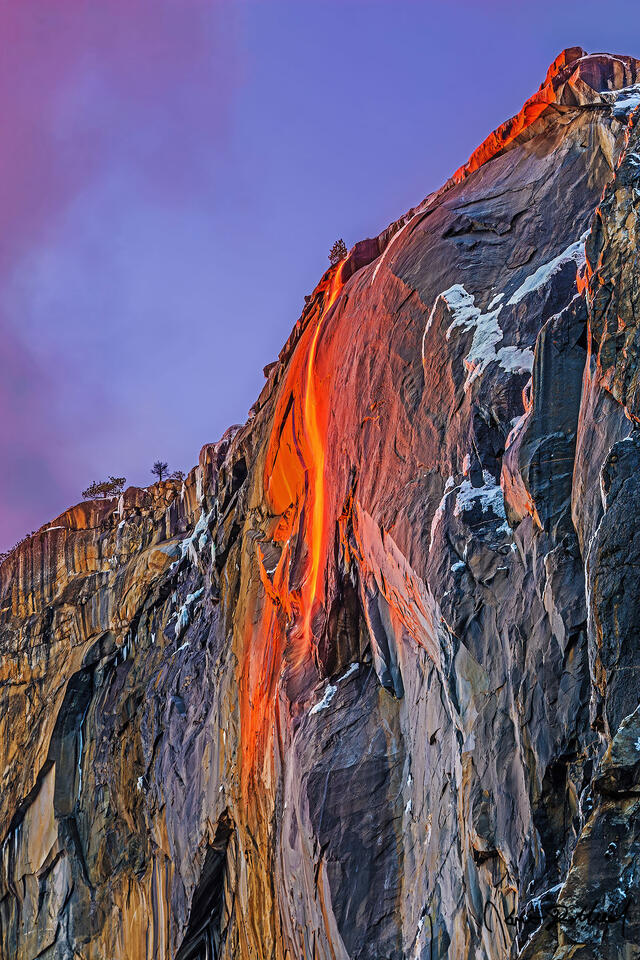
For 2 weeks a year during mid to late February when the sun is in the correct position in the sky, Yosemite's Horsetail Fall will illuminate orange like Lava at sunset. First photographed by Galen Rowell in February 1973, this optical illusion is created when light from the setting sun bounces off the cliffs of El Capitan and backlights Horsetail Falls orange like lava. The term “Firefall” came into use because it reminded Rowell and others of the historic Yosemite Firefall from Glacier Point, when hot embers were dumped nightly from Glacier Point Hotel and Mountain House Hotel from Glacier Point down towards Camp Curry in Yosemite Valley below.
The historic Firefall event ended in 1968 after the director of the park service discontinued it due to it being inconsistent with the parks mission to protect natural wonders. A short 5 years later, photographer Galen Rowell would witness the naturally occurring Firefall optical illusion of Horsetail Fall. He parked his car, hopped a fence and captured his now famous image of the Yosemite Firefall, bringing the modern Firefall into public lexicon for the first time.
Unlike the historic Firefall, the modern Horsetail Falls Yosemite Firefall is a 100% naturally occurring optical illusion. Conditions have to be perfect for this optical illusion to occur. Horsetail Fall to be flowing; it’s a very small ephemeral waterfall so that is a big if. If it’s too cold or there is not enough snow above in the high country it won’t flow. If it's too warm or not enough snow it also won’t flow. The sun actually sets at the correct angle twice a year, but the water is almost never flowing later in the year when the suns angle is correct. Even if the waterfall DOES flow, you need the weather to be JUST RIGHT. One rogue cloud in the wrong spot can block the sunlight, bringing the illusion to an end before it even begins. However, when the conditions line up just right during the right time of year, Horsetail Fall lights up orange like molten lava and the Yosemite Firefall illusion comes to life.
I’ve been fortunate to have been able to experience and witness modern Yosemite Firefall many times over a decade and a half plus, starting long before its increasing popularity led to the current restrictions and permits required. Some of my favorite moments experiencing the Horsetail Fall Firefall are from the south side of the Merced River, a view which is no longer possible.
Over the course of my long career as a professional fine art landscape and nature photographer, I’ve photographed the Horsetail Fall Firefall from almost every conceivable angle. I’ve brought my family along on many occasions, and some of my most memorable moments of this will always be watching my wife and young sons faces light up with wonder as Horsetail Fall makes its final turn from a normal waterfall to the look of pure molten lava flowing over the cliff of El Capitan. It’s something that truly has to be seen to be appreciated.
The modern Yosemite Firefall is now world famous, and rightfully so. Time stands still once the water makes that turn. Those brief few moments where you witness the waterfall glow orange like lava and fire feel like the hold on forever. It’s always a peaceful and serene experience, and no matter how many or how few people have been around me during these moments I’ve always been able to block out these external factors and experience this event in all its glory. It’s an incredibly profound experience, and I hope everyone viewing my Yosemite Firefall (Horsetail Fall) Fine Art Photograph gallery is able to experience the same feelings of awe and wonder that I’ve always felt here.