Grand Canyon National Park Fine Art Landscape Photography - Limited Edition Prints For Sale

The Grand Canyon cuts over 1 mile deep, 18 miles wide and 277 river miles long as the Colorado River flows through it. Unique erosion, geologic color and geologic formations decorate the stunning landscapes and sweeping vistas below as millions of year’s worth of rock lay exposed. Famous viewpoints on the South Rim include Mather Point, Yavapai Point, Hopi Point; Powell Point, Yaki Point; Duck on a Rock; Grandview Point; Lipan Point; Navajo Point and the Desert View Watchtower. Famous viewpoints on the North Rim include Point Imperial; Bright Angel Point, Cape Royal and Cape Final. Famous formations such as Wotans Throne and Vinshu Temple can be seen from both rims. No matter where you go in the Grand Canyon, you are sure to find spectacular views.

One of my favorite things about the Grand Canyon has always been how the various viewpoints provide a different feeling, as they each focus on different parts of the canyon. The North Rim and South Rim both provide differing feelings as well. The South Rim put you up closer to the main canyon and closer to the river, with more intimate views compared to the wide, sweeping views of the North Rim which feel more expansive. The higher elevation of the North Rim means colder temperatures, and it’s far more isolated than the South Rim. For me, that solitude and remoteness has always been part of the North Rim's appeal.

I’ve spent a lot of time at both the North Rim and South Rim over the decades, and the solitude of the North Rim will always been one of my favorite things about it. It almost feels like you’re in a time warp. Things slow down, and the remoteness provides a wonderful feeling of peace and serenity that's getting harder and harder to find in the modern world.

The South Rim has its own charm, especially if you get further away from the crowds around Grand Canyon Village. East Rim Drive has a wide variety of views, as does Hermit’s Rest Road at the western end of the park. No matter where you’re at on the rim in this magnificent place, it’s a more intimate view that puts you closer to the river below. This really helps provide a feeling of wonder and awe, as you look out at the beautiful formations erosion has caused over countless millennia.

I’ve been visiting both the North Rim and South Rim of the Grand Canyon for decades, and no matter how many times I’ve been I always feel the same feelings of awe and wonder every time I visit. I hope my Grand Canyon Fine Art Landscape Photography gallery brings the same feeling of awe, wonder, peace and serenity to everyone viewing it.
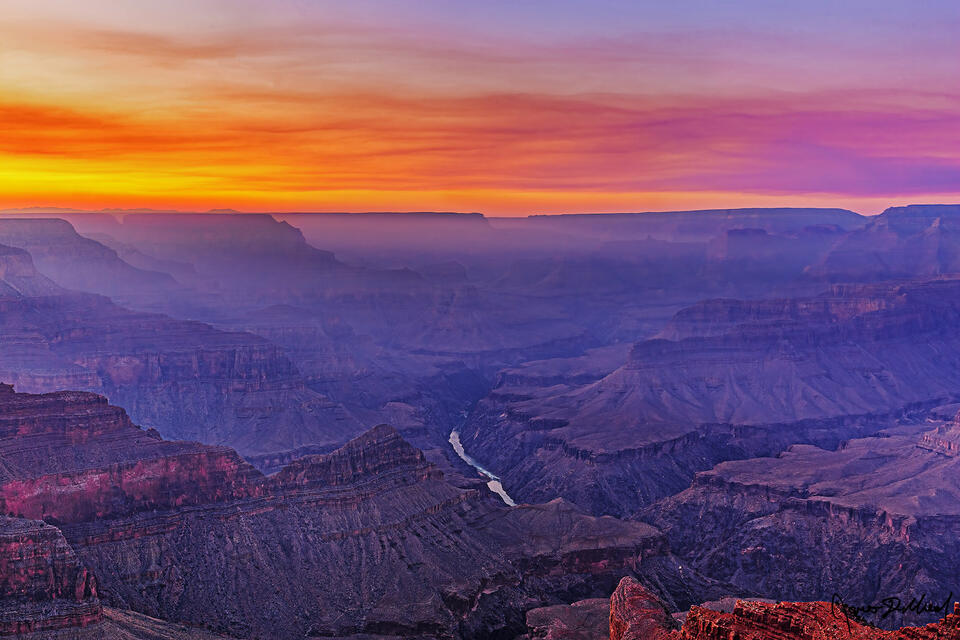
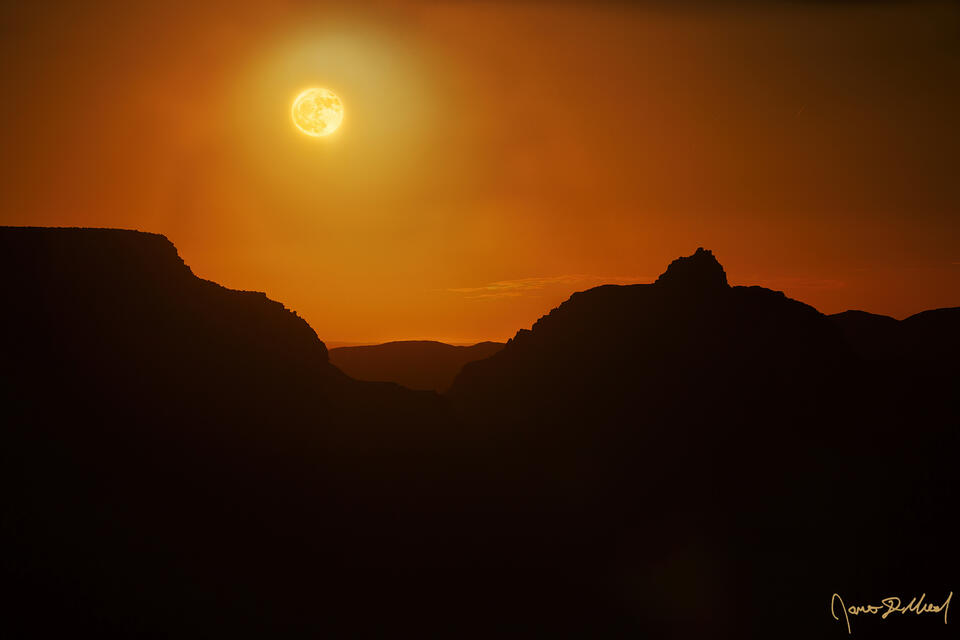
Haze from a prescribed burn envelopes the Grand Canyon as sunset produces a brilliant ray of sunlight through the haze in the canyon.
Mohave Point, South Rim, Grand Canyon National Park, Arizona
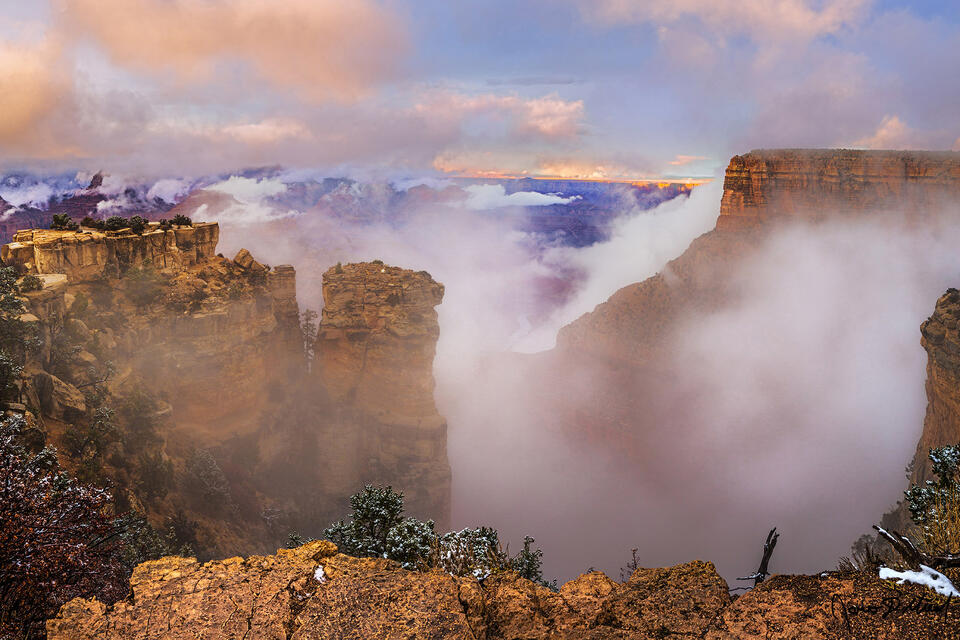
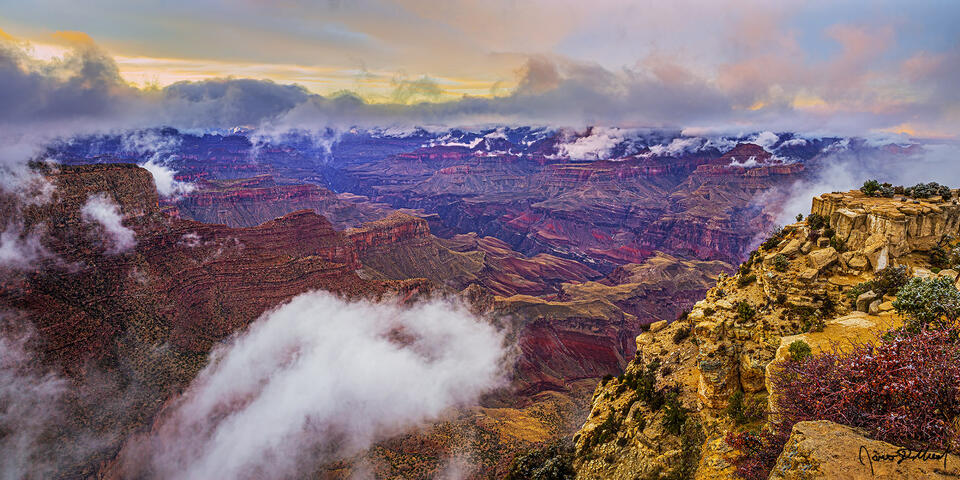
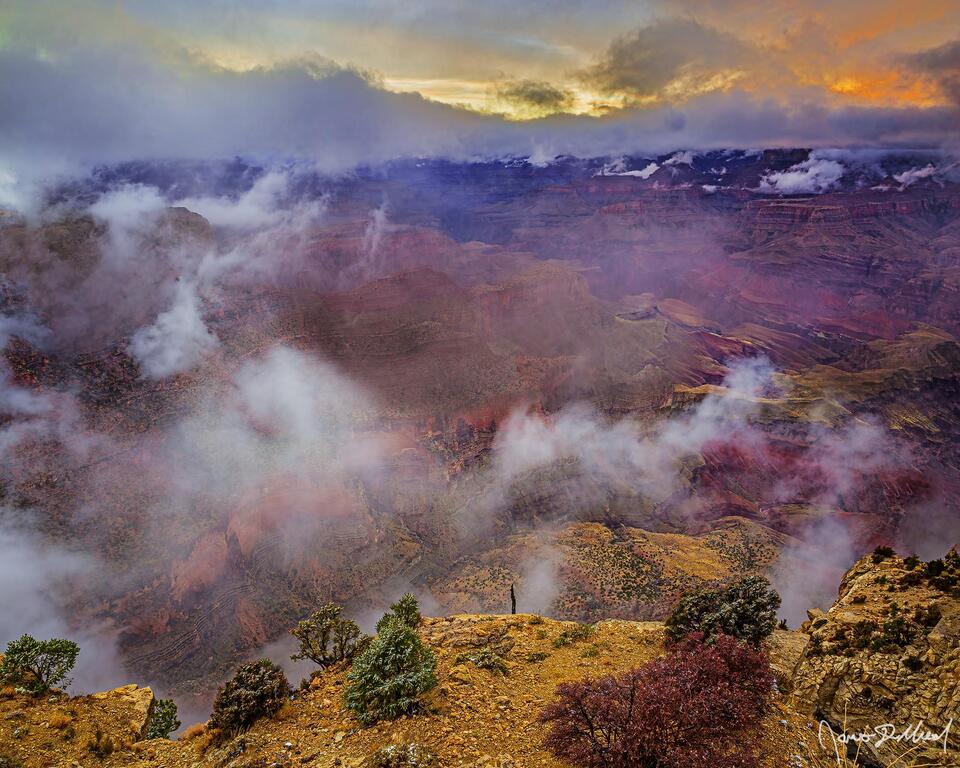
A partial thermal inversion fills the Grand Canyon at Sunset as the Colorado River far below formations rising up through the clouds of the inversion.
Moran Point, South Rim, Grand Canyon National Park, Arizona
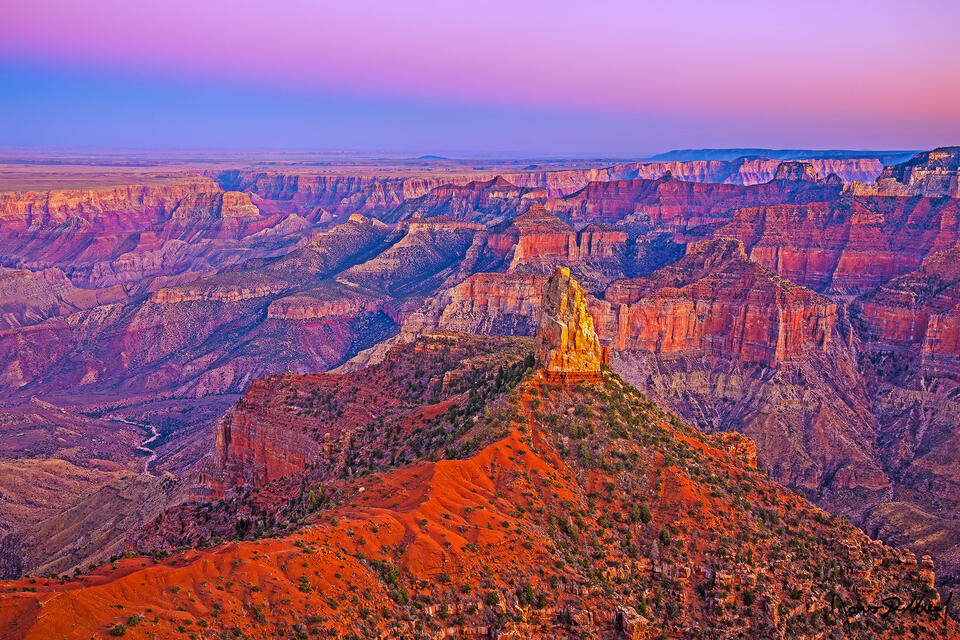
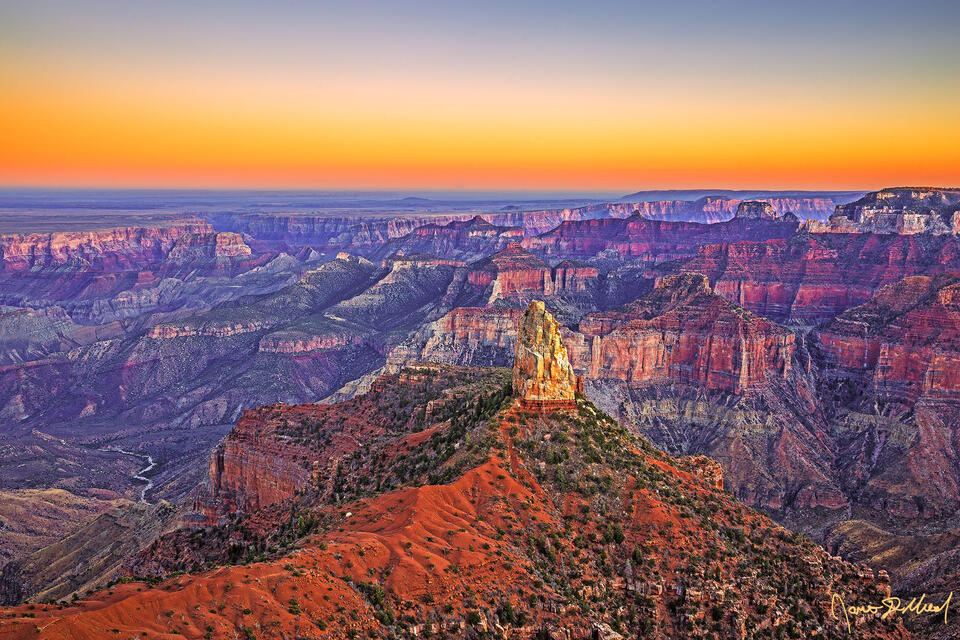
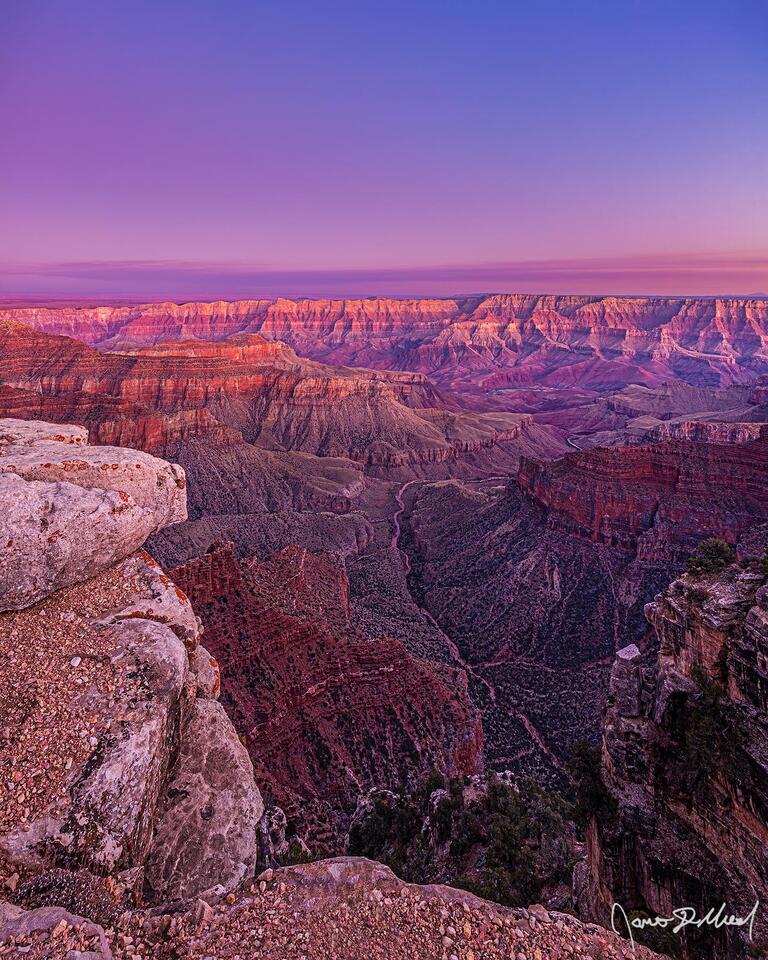
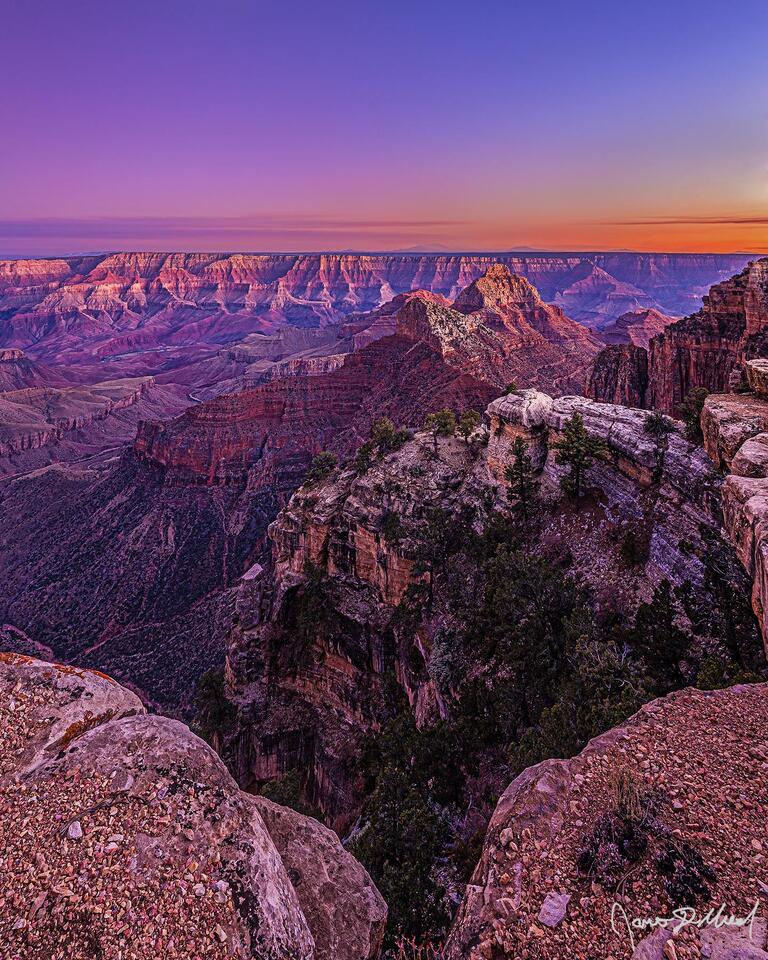
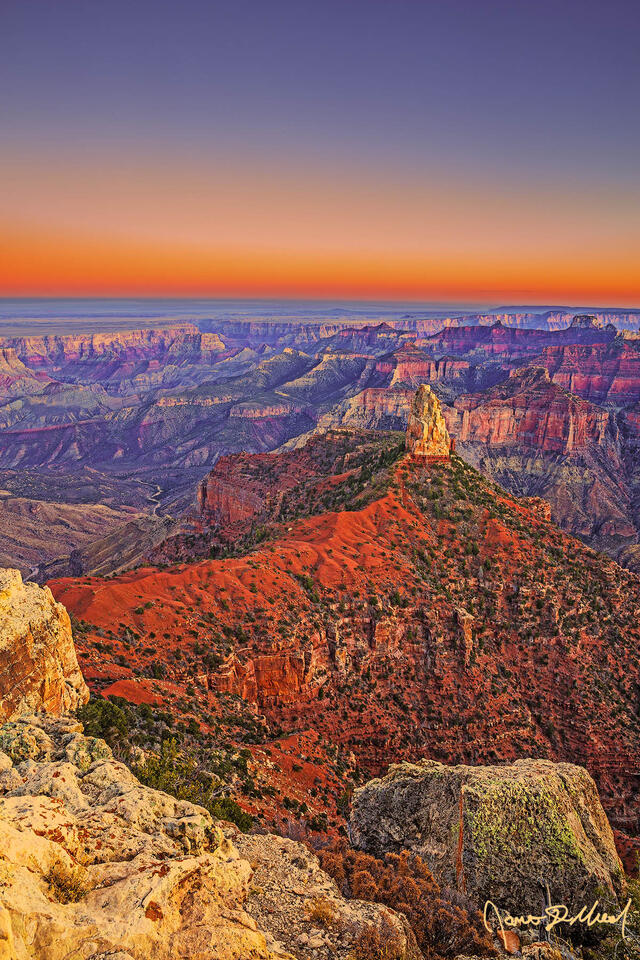
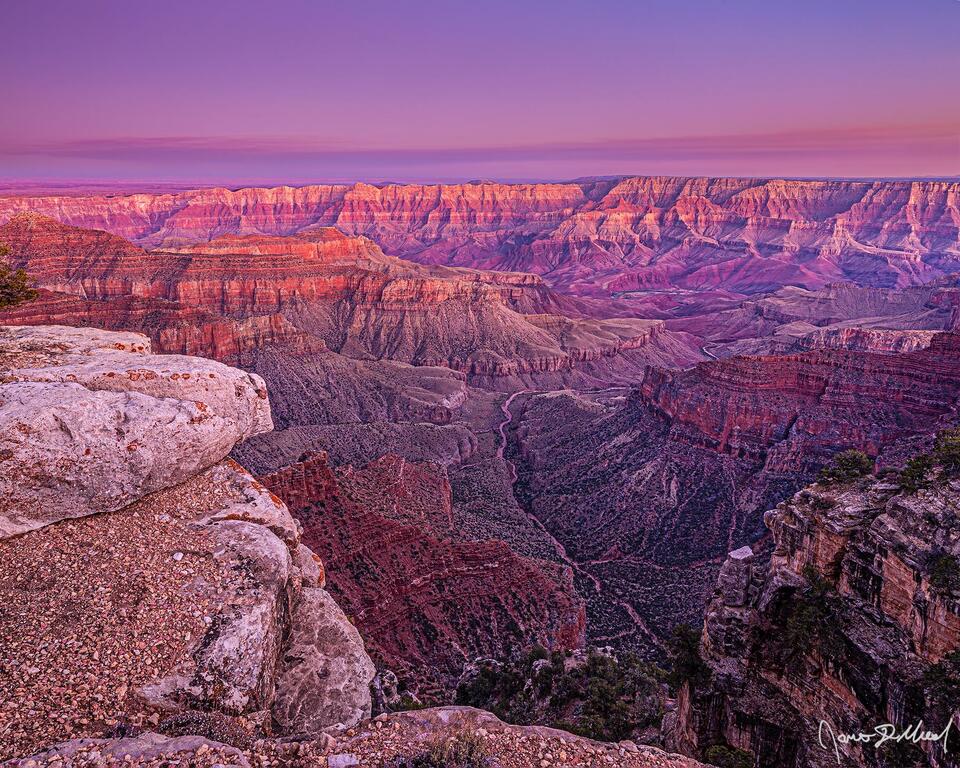
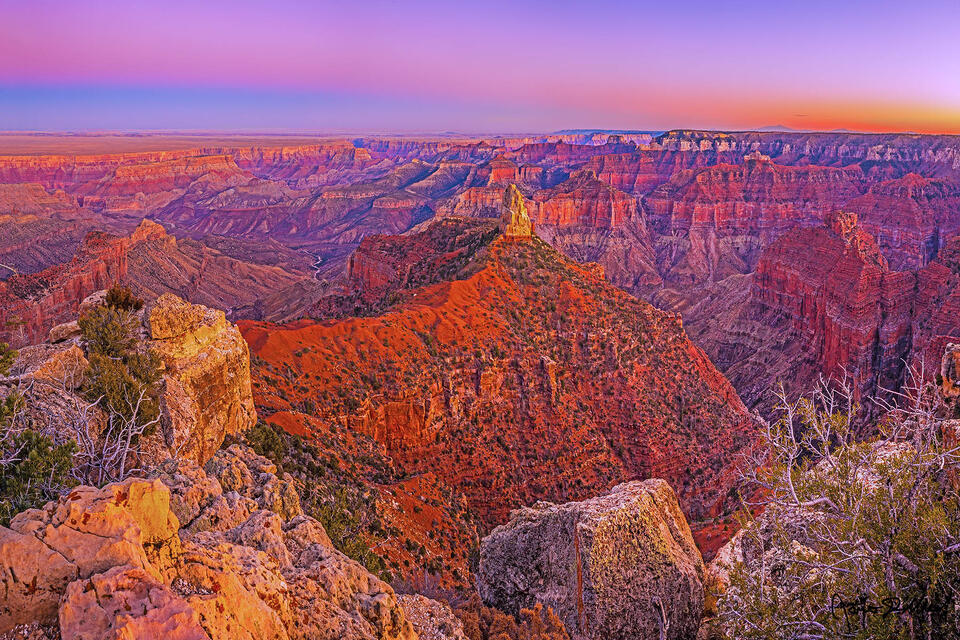
Belt of Venus begins to show at Sunset above Mount Hayden, Alsap Butte, Colter Butte, Ehrenberg Point, and Nankoweap Creek along the North Rim of Grand Canyon
Point Imperial, North Rim, Grand Canyon National Park, Arizona
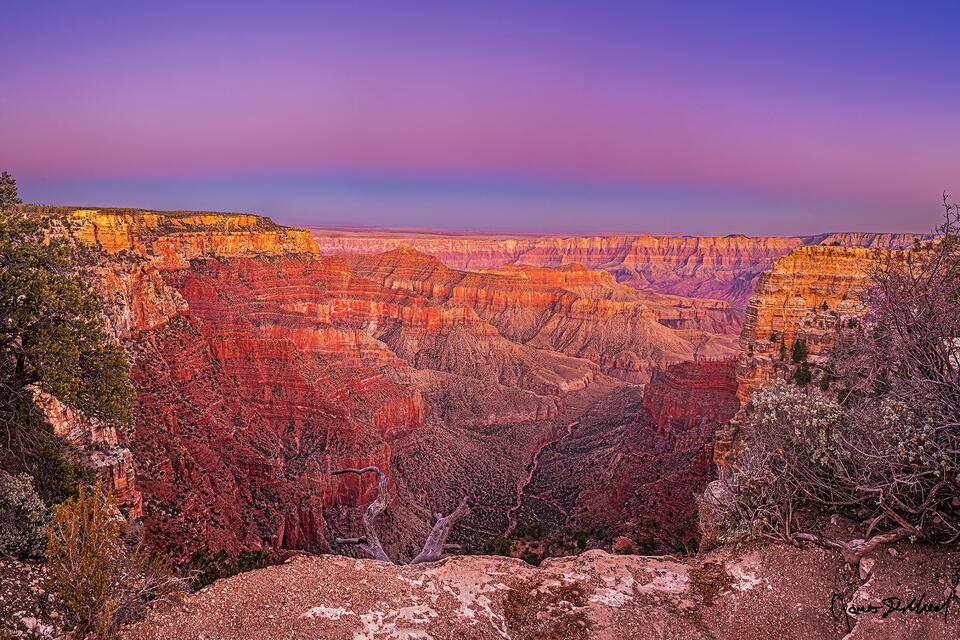
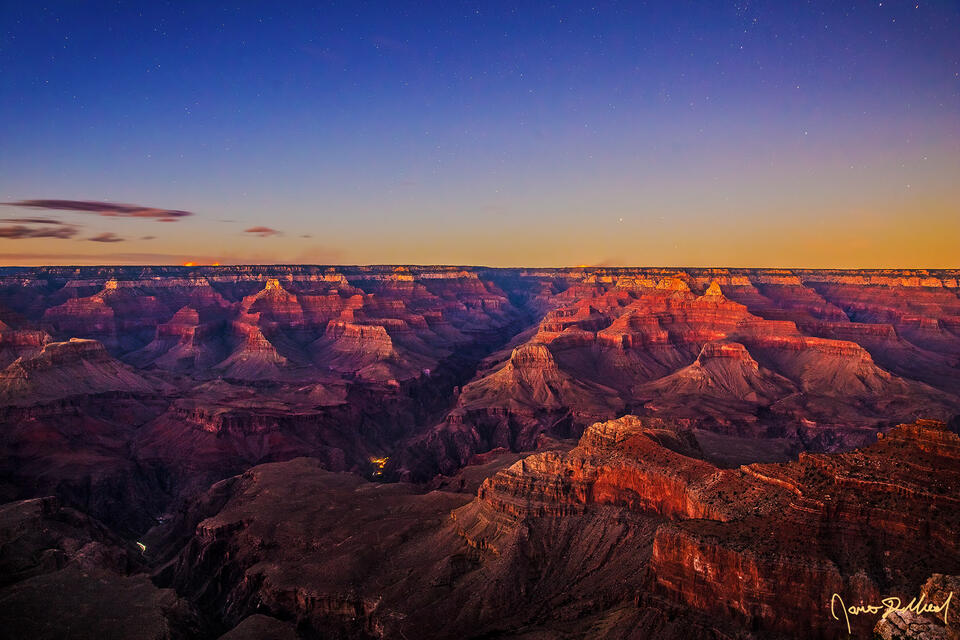
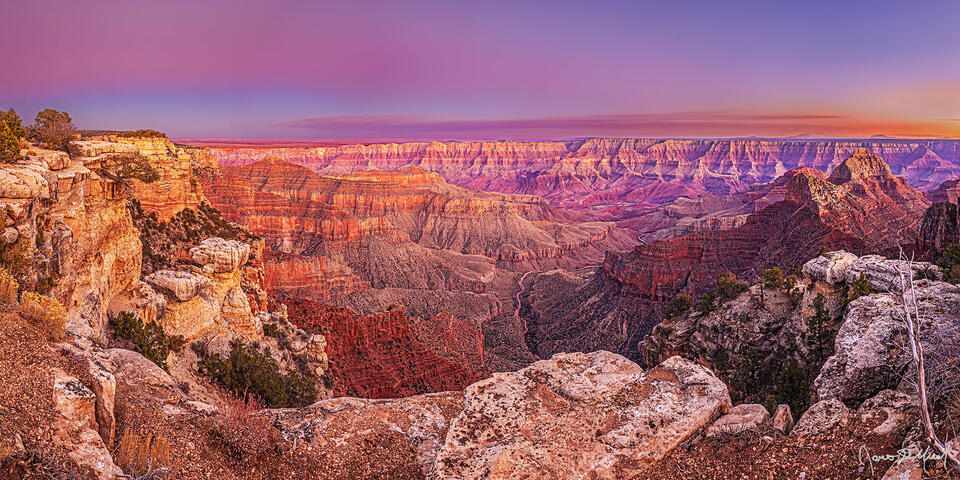
The Belt of Venus illuminates the skies above Jupiter Temple, Venus Temple, Apollo Temple, Cape Final and the other formations of Grand Canyon just after sunset
Cape Royal Road, North Rim, Grand Canyon National Park, Arizona
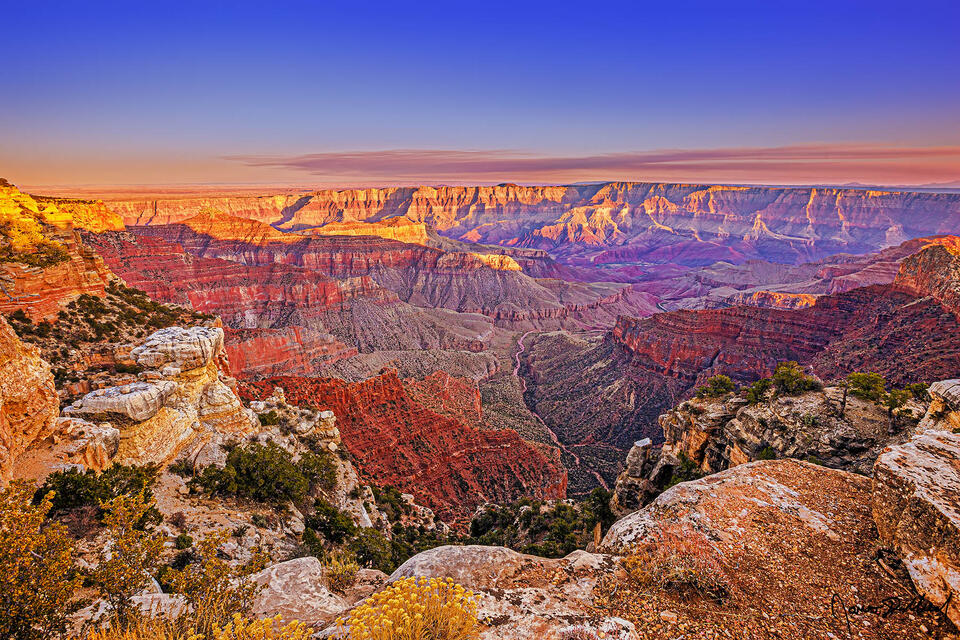
Sunset casts a glow onto Jupiter Temple, Venus Temple, Apollo Temple, Cape Final and the Palisades of the Desert as pastel colors begin to show above.
Cape Royal Road, North Rim, Grand Canyon National Park, Arizona
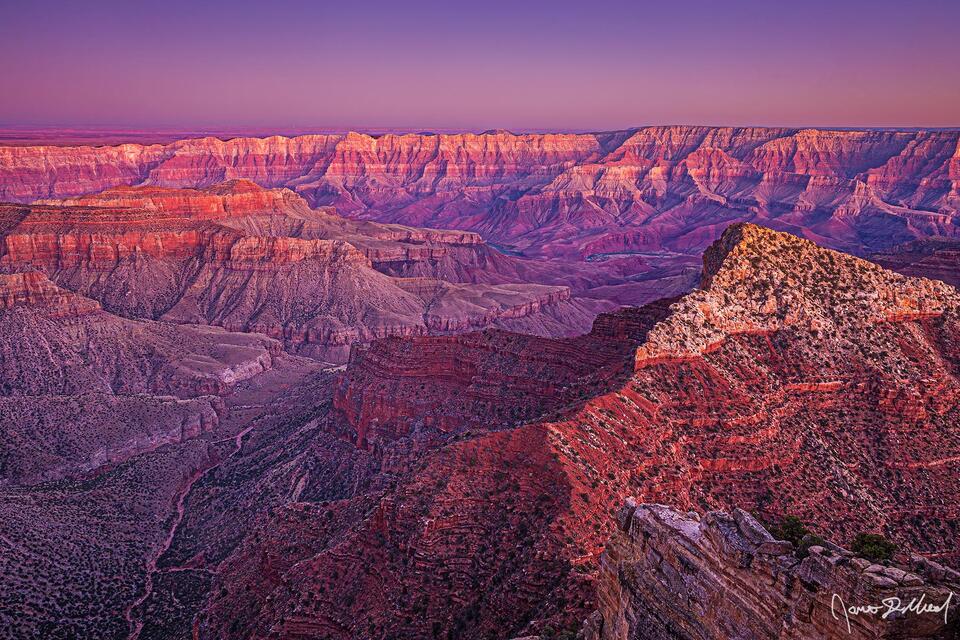
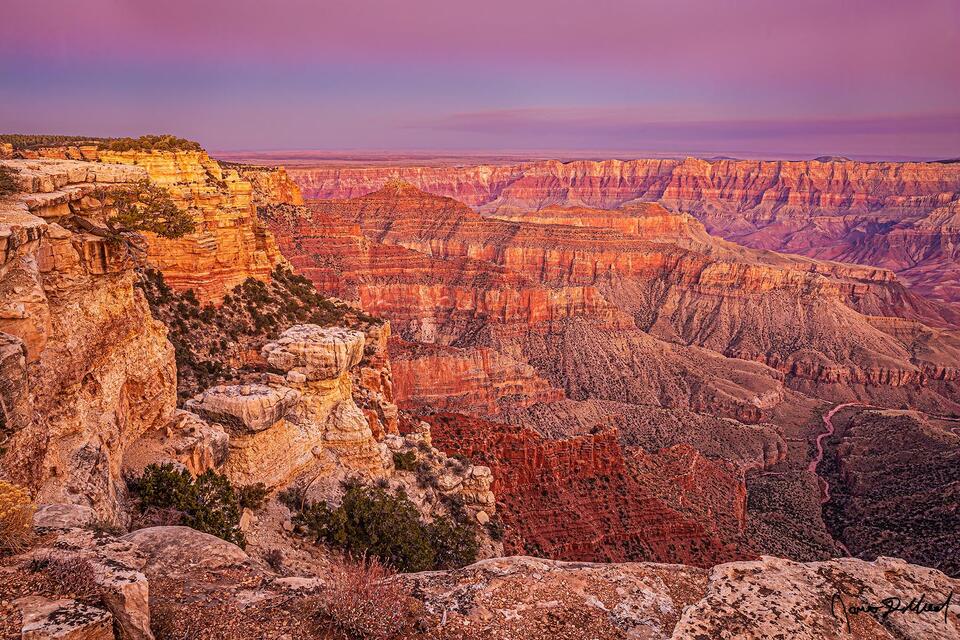
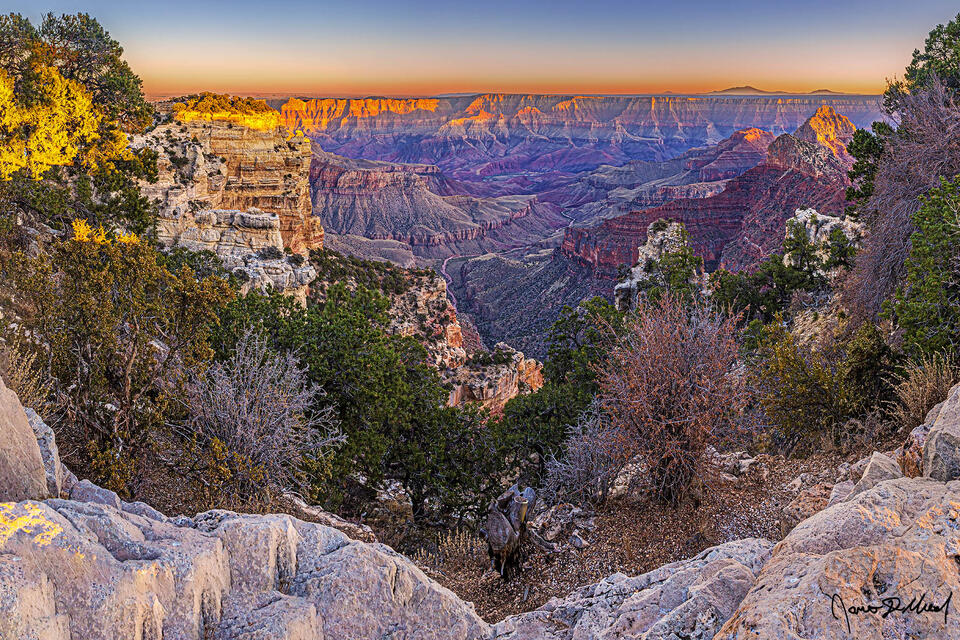
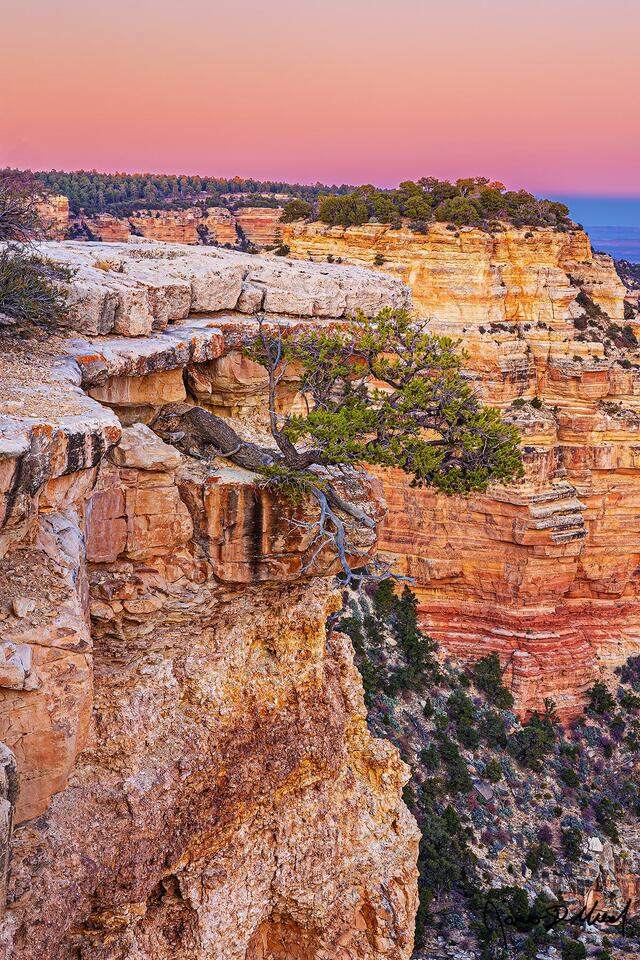
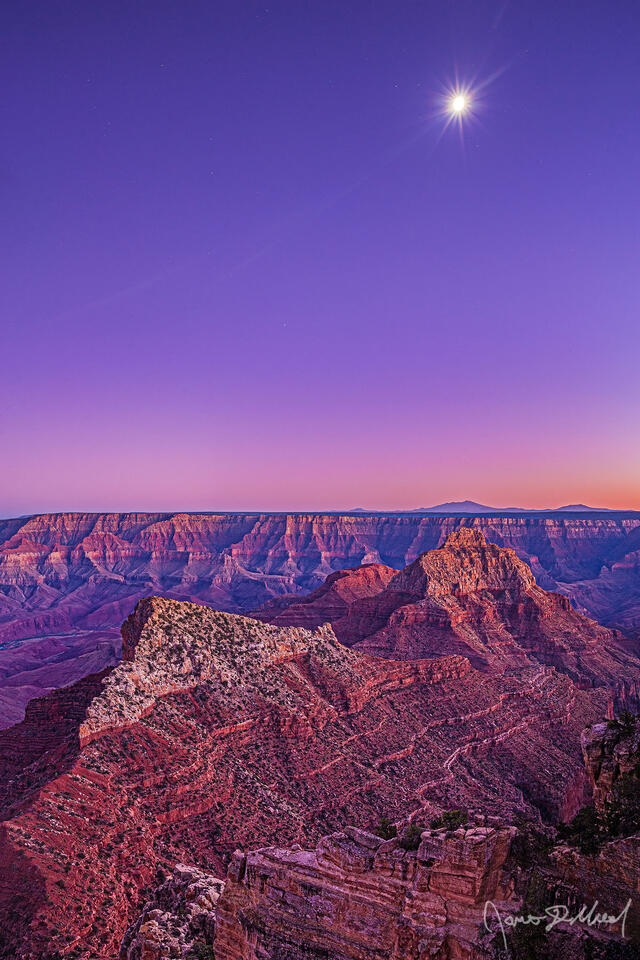
Light from the setting sun casts a golden glow onto Cape Final, the Palisades of the Desert, Rama Shrine and Vishnu Temple as soft pastel colors begin to show
Walhalla Overlook, North Rim, Grand Canyon National Park, Arizona
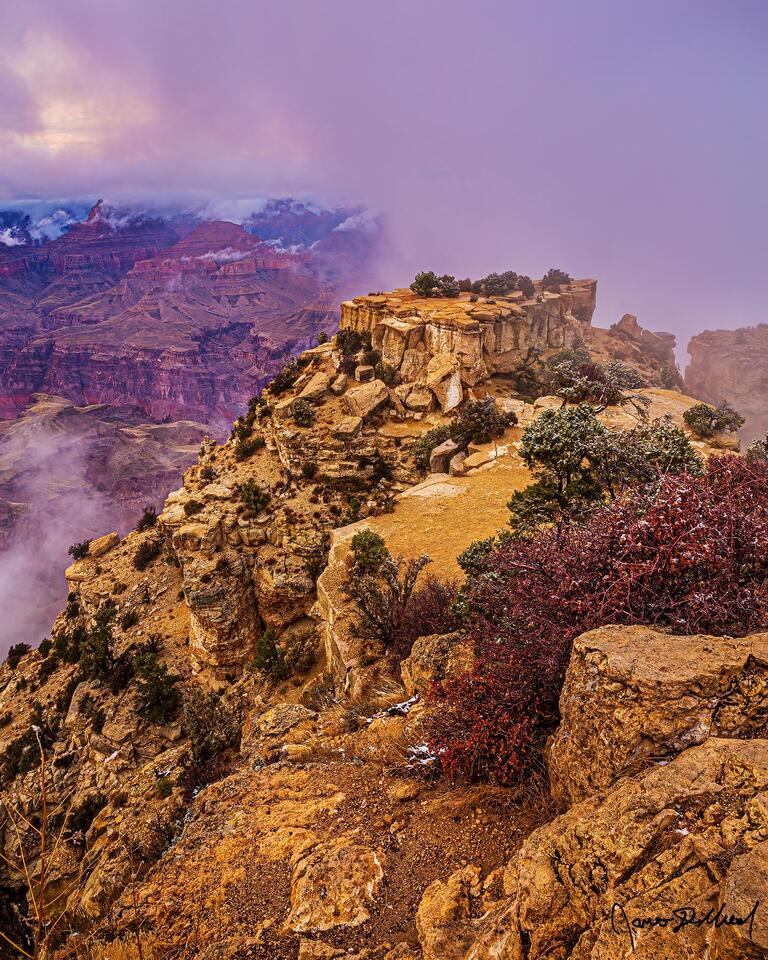
A partial thermal inversion begins to  form in the Grand Canyon as sun shines through a spot in the clouds above at sunset.
Moran Point, South Rim, Grand Canyon National Park, Arizona
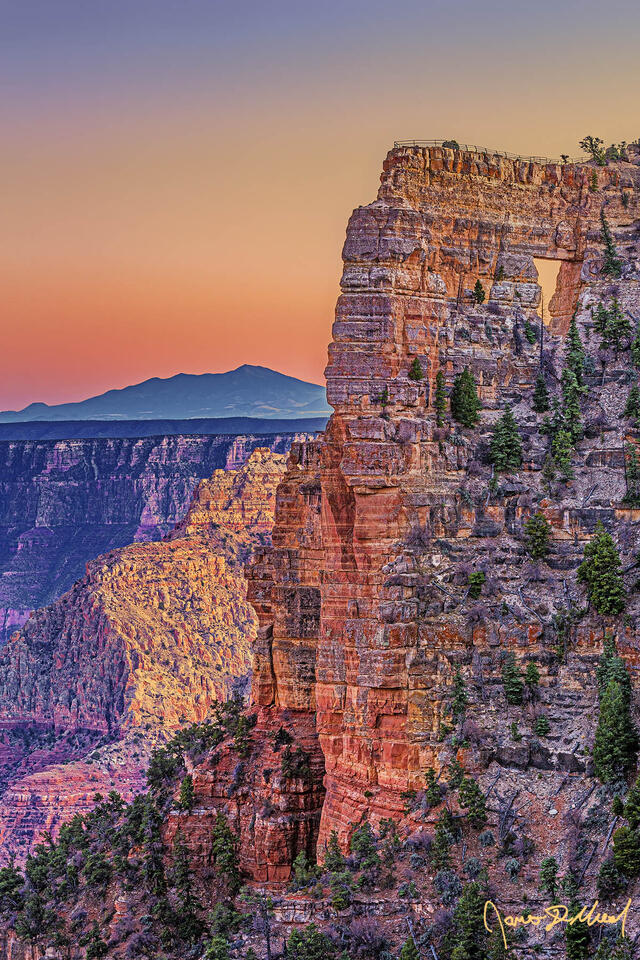
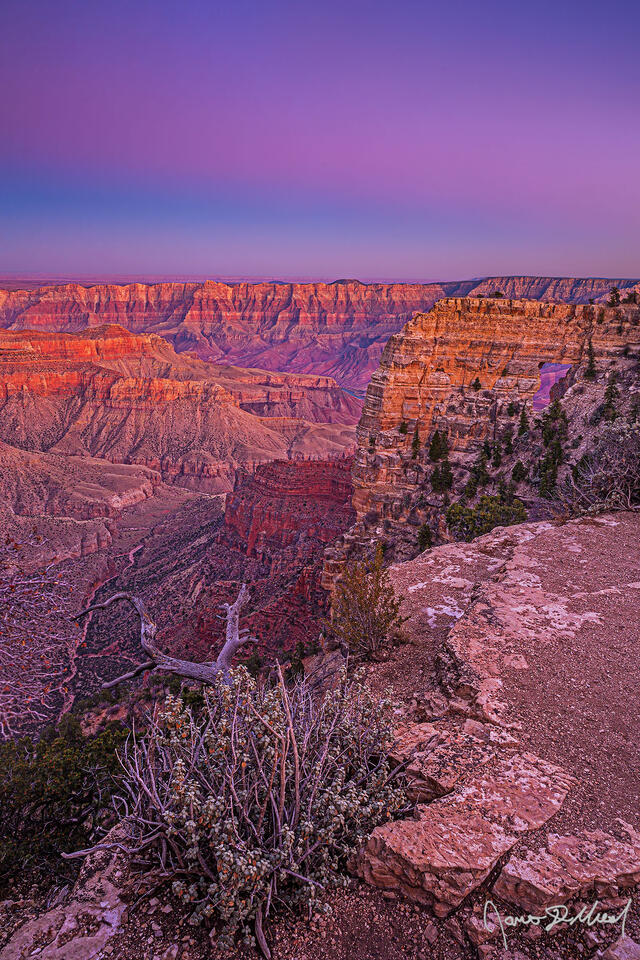
Sunset brings color to the skies above Angels Window, the Palisades of the Desert and Vishnu Temple in Grand Canyon National Park as San Francisco Peaks rise up
Angels Window, North Rim, Grand Canyon National Park, Arizona
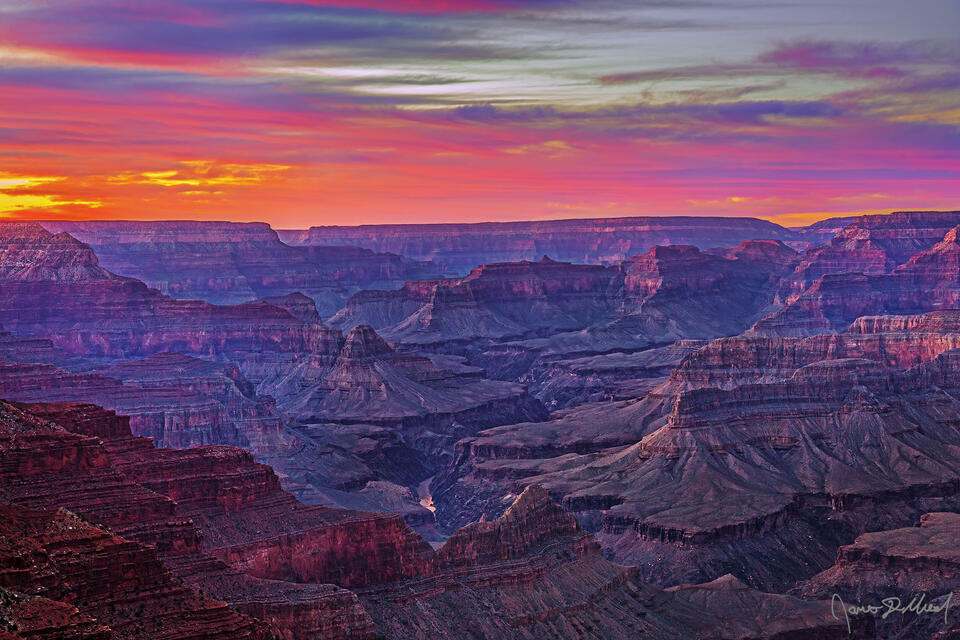
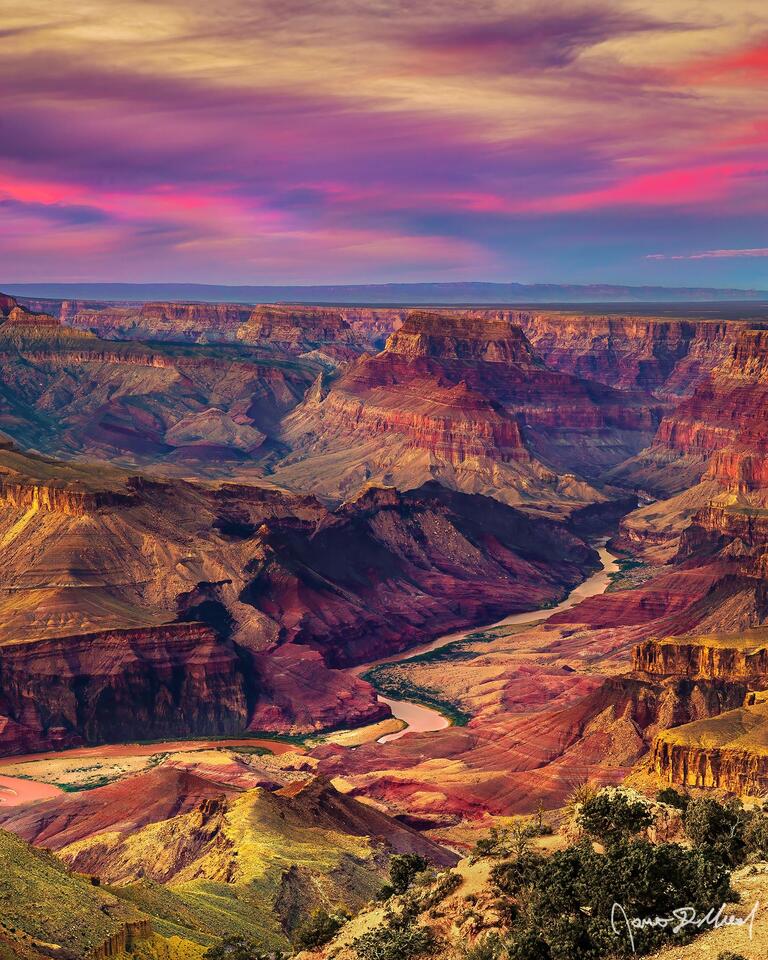
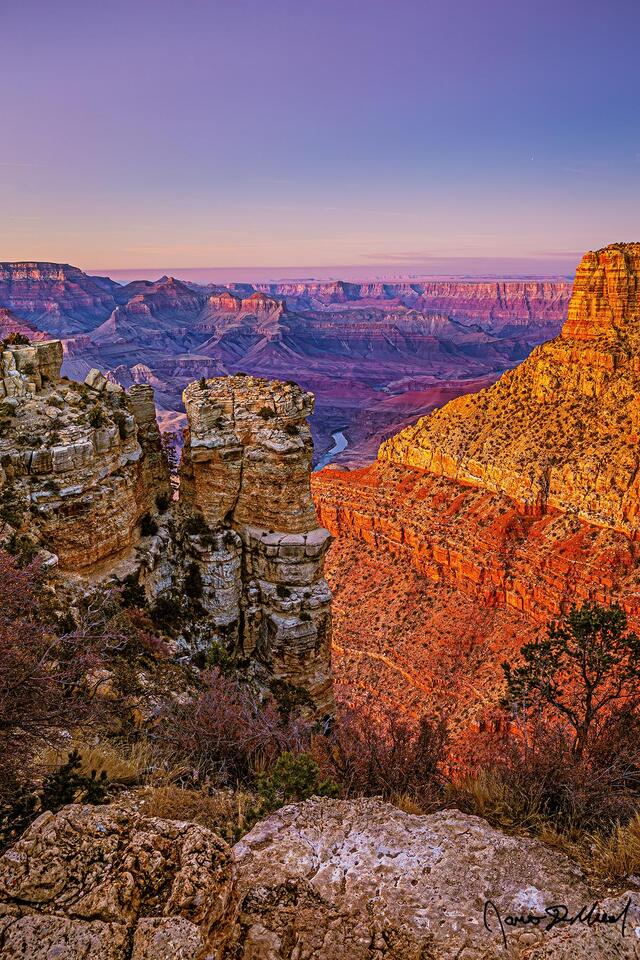
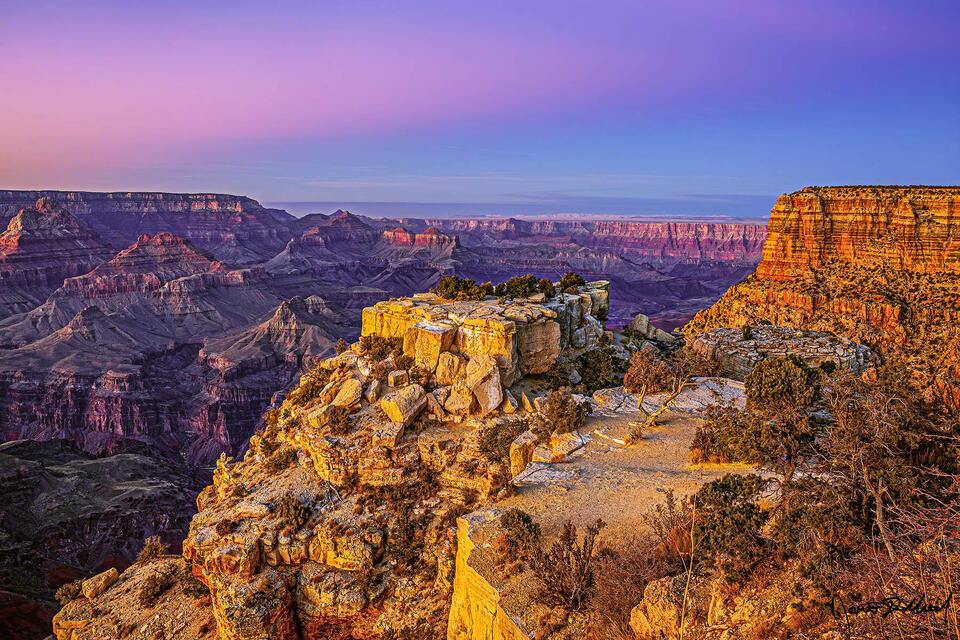
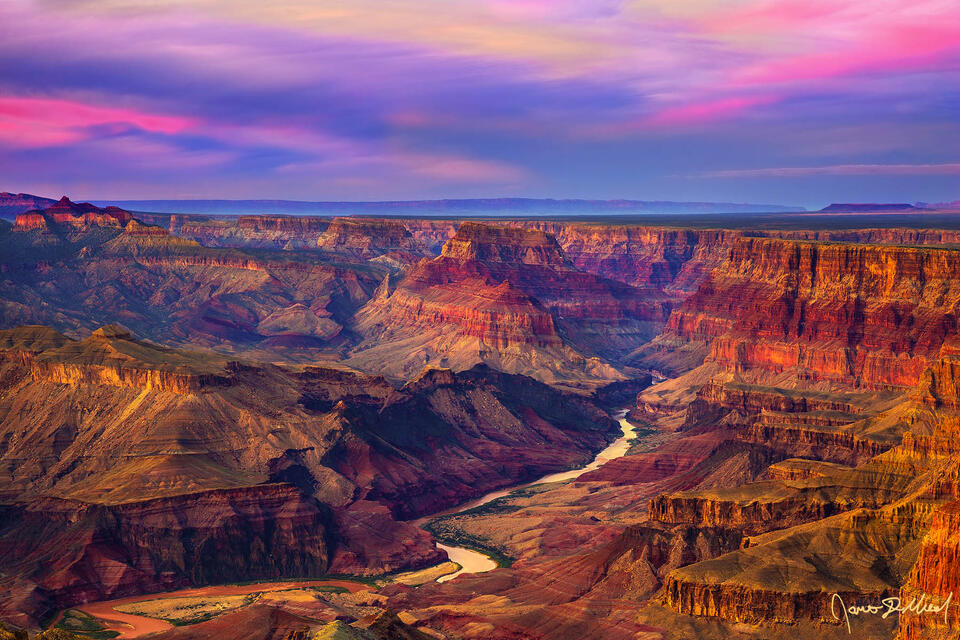
The warm glow of sunset bathes the buttes and temples of the Grand Canyon at sunset as the pastel colors of the Belt of Venus illuminate the skies above.
Moran Point, South Rim, Grand Canyon National Park, Arizona
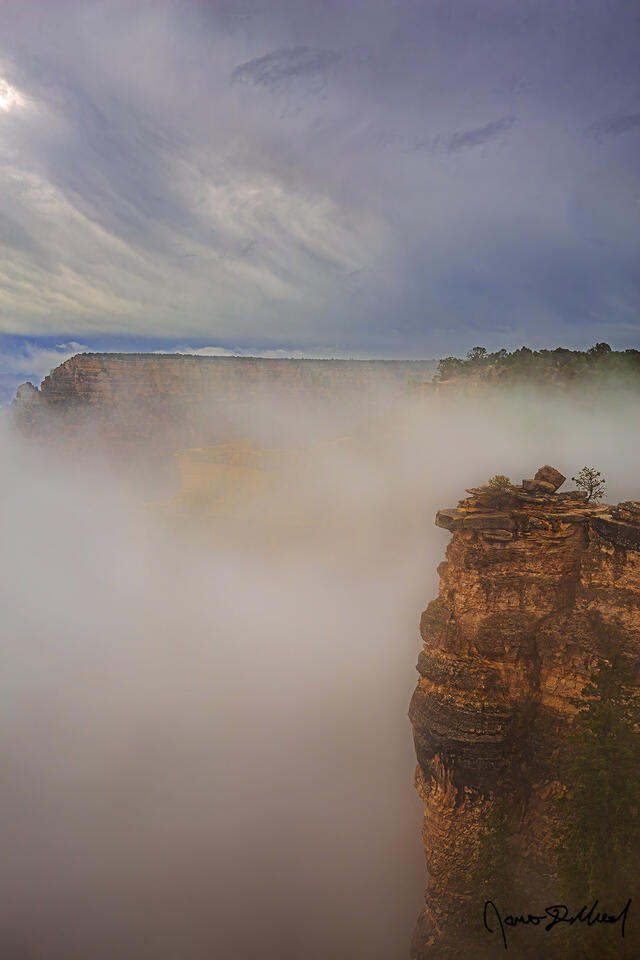
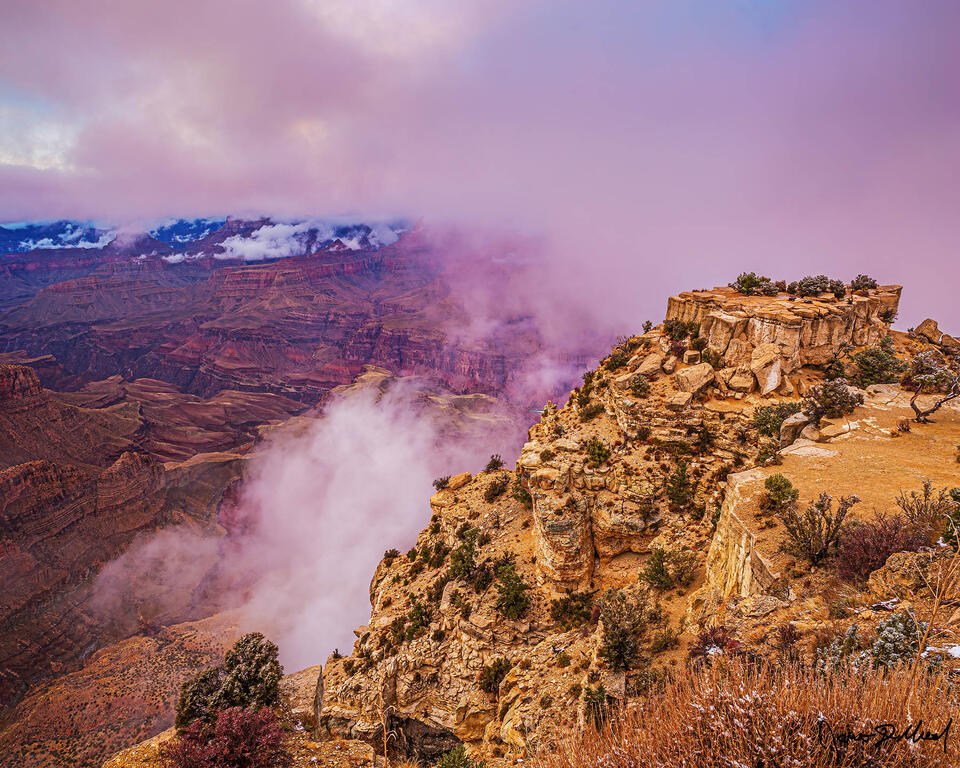
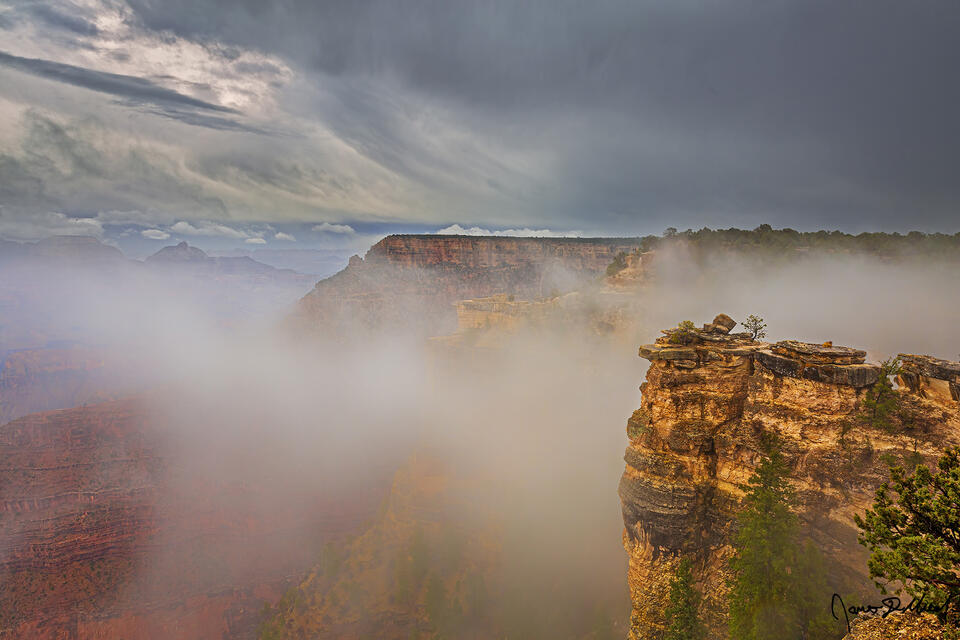
A temperature inversion (full thermal inversion, total cloud inversion) creates a rare sight as clouds fill the Grand Canyon while storm clouds line the skies.
Mather Point, South Rim, Grand Canyon National Park, Arizona
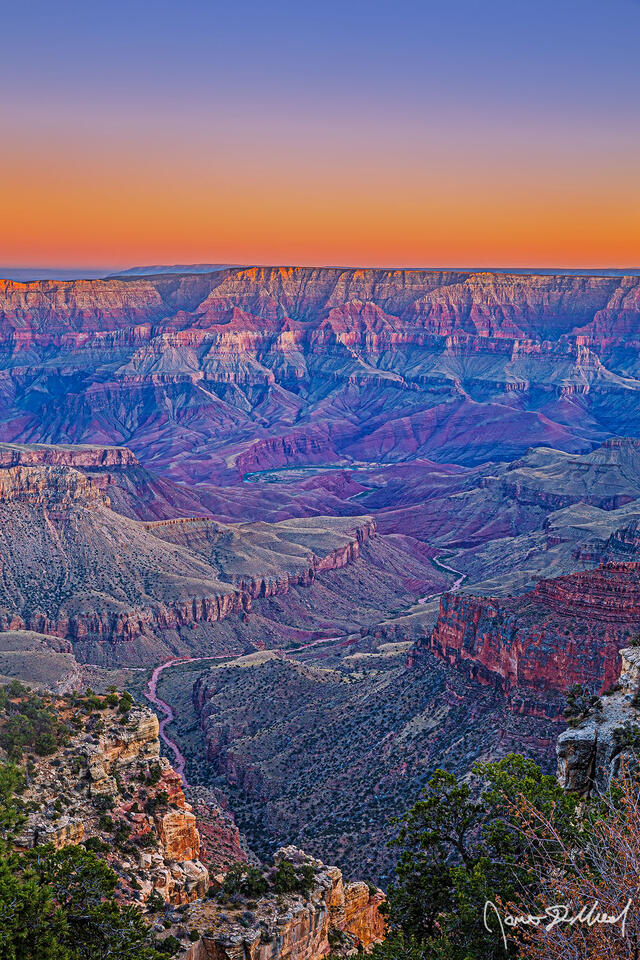
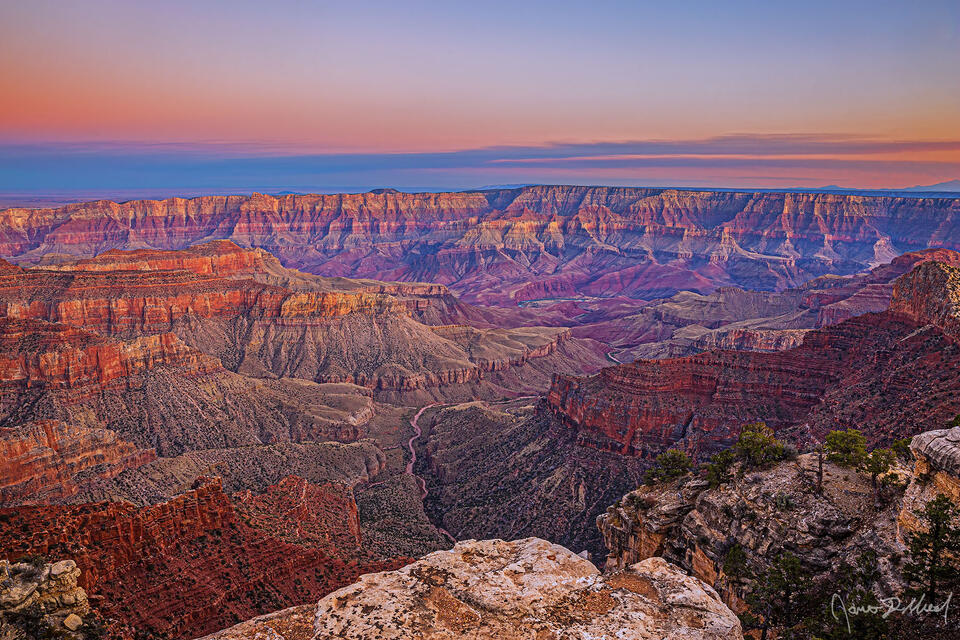
Pastel colors at sunset show in the skies above the Palisades of the Desert, Unkar Creek and the Colorado River as light glows on the east rim and south rim.
Wahalla Overlook, North Rim, Grand Canyon National Park, Arizona
Sunset illuminates the skies above Mount Hayden, Alsap Butte, Colter Butte, and Ehrenberg Point along the North Rim of Grand Canyon National Park.
Point Imperial, North Rim, Grand Canyon National Park, Arizona
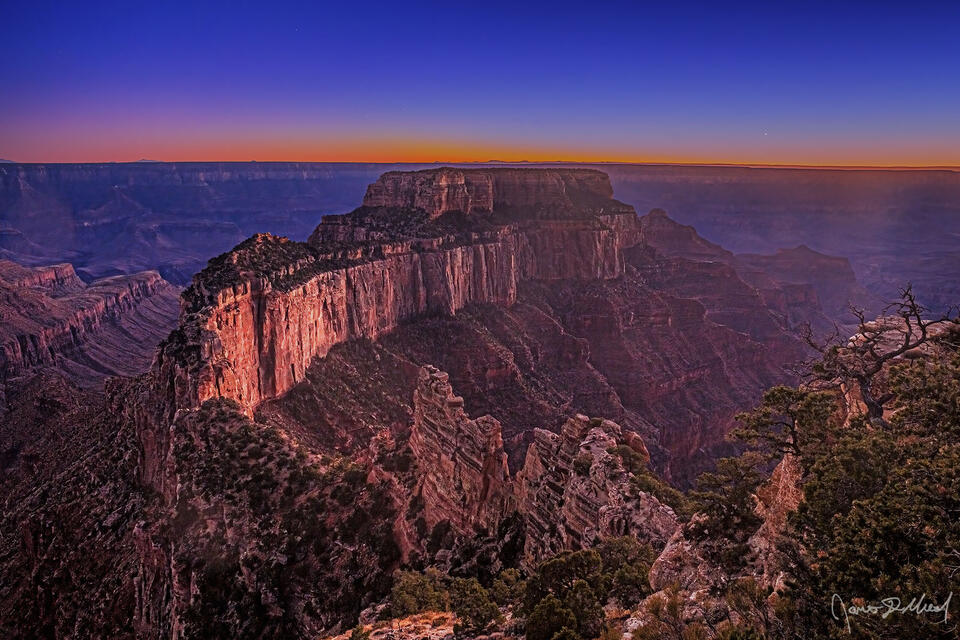
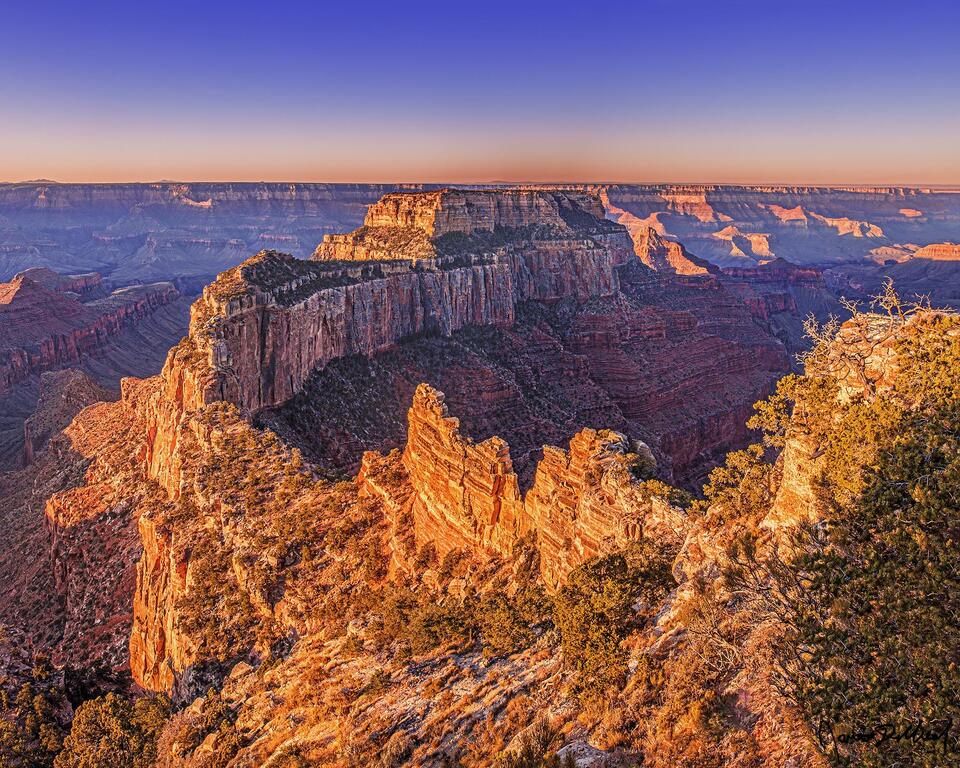
Sunrise casts a warm glow onto Wotan's Throne, Cape Royal and the south rim of the Grand Canyon in the distance as a new day begins.
Wotans Throne, Cape Royal, Grand Canyon National Park, Arizona
A temperature inversion (thermal inversion, cloud inversion) creates a rare sight as clouds fill the Grand Canyon while storm clouds line the skies high above.
Mather Point, South Rim, Grand Canyon National Park, Arizona