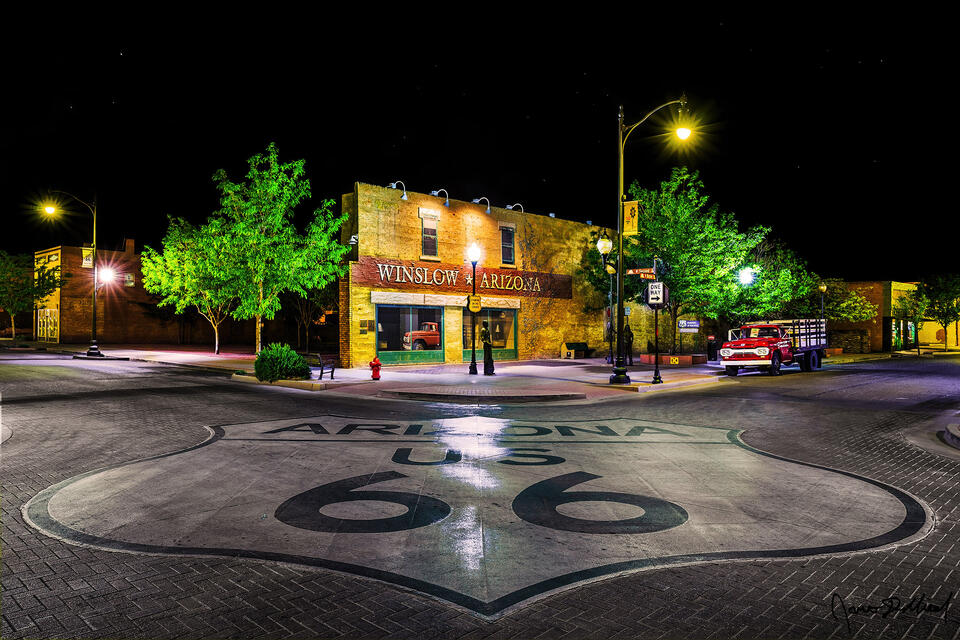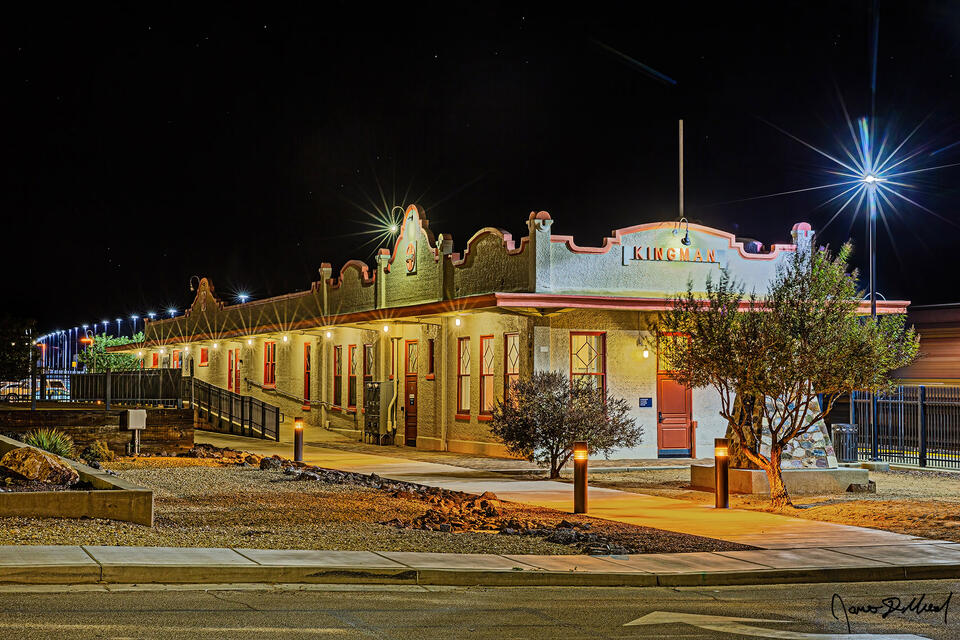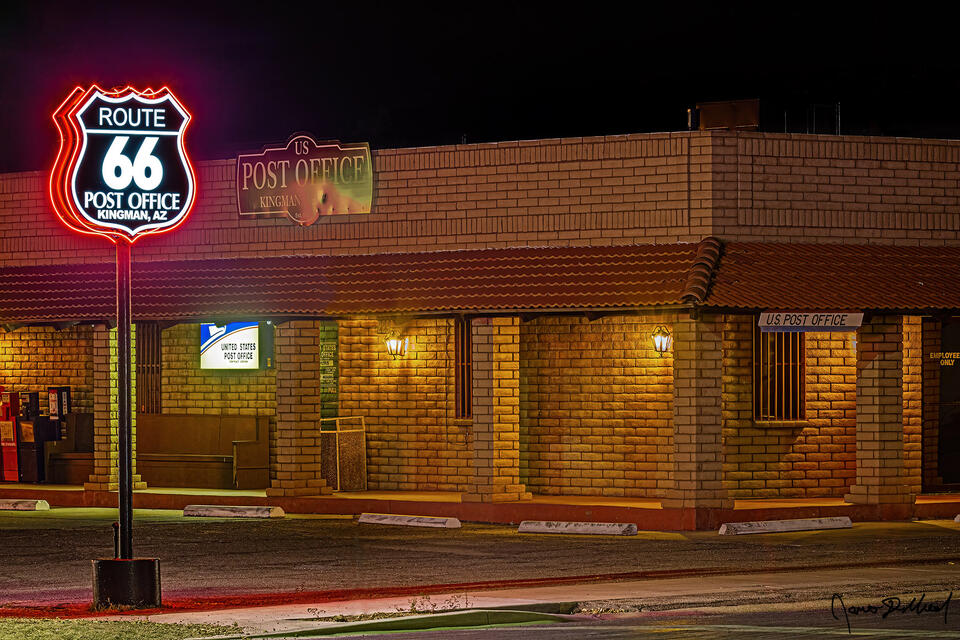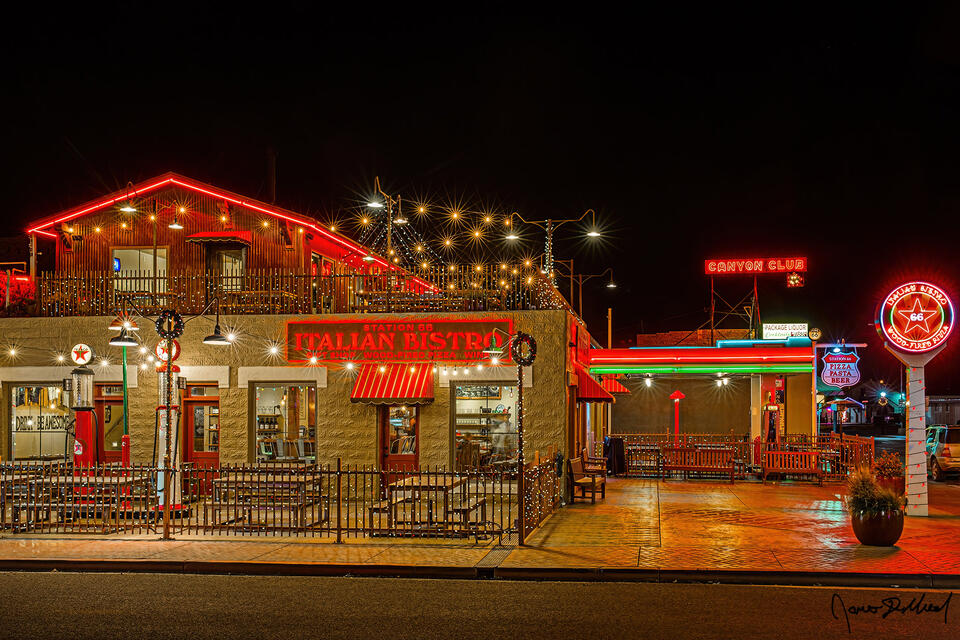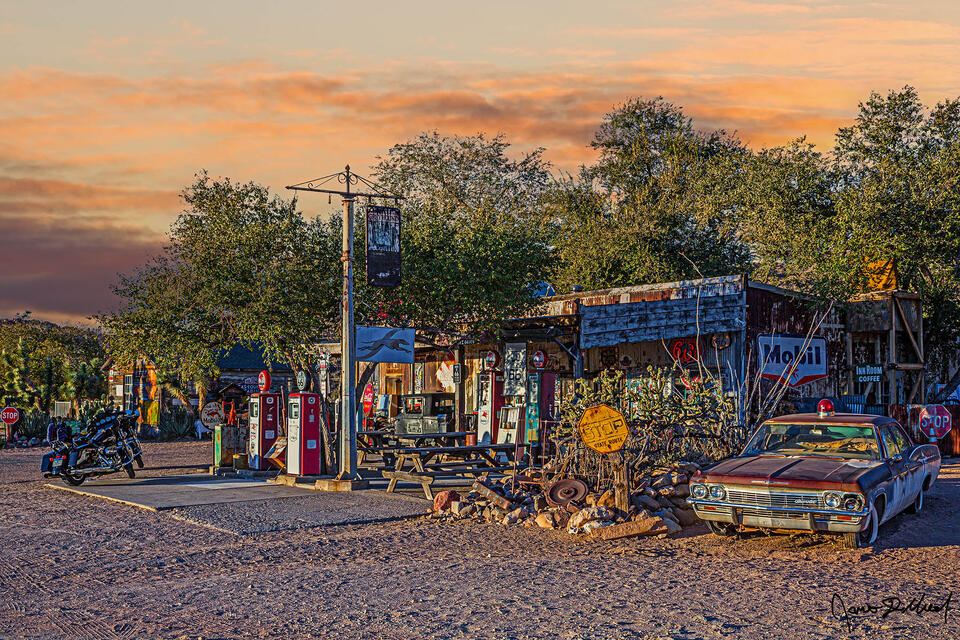
Route 66 Fine Art Photography: Documenting the Main Street of America
Perhaps nothing personifies Americana from the 20th century more than US Route 66, known as “The Mother Road.” Although long since bypassed by the interstate highway system, Route 66 (also nicknamed The Main Street of America and The Will Rogers Highway) still evokes a feeling of nostalgia and days gone by. Route 66 was originally designated on November 11, 1926 as US Highway 66. Author John Steinbeck originally coined the term the “Mother Road” to describe Route 66 in his 1939 novel The Grapes of Wrath. Steinbeck said “66 is the mother road, the road of flight” and 7 years later the King Cole Trio would release their song “(Get Your Kicks on) Route 66,” further enshrining it in American Pop Culture.
The Birth of the American Road Trip: From Chicago to the Pacific
Route 66 was the birthplace of the great American road trip, originally connecting Chicago, Illinois to Santa Monica, California running through Missouri, Kansas, Oklahoma, Texas, New Mexico and Arizona over a span of 2,448 miles en route to the Pacific Ocean in Santa Monica. It originally symbolized escape, a hope for a new beginning, and a symbol for freedom and the American Dream. By the 1930s, it had become a lifeline to the trucking industry and it grew to compete with the railroads in the shipping industry.
The Interstate Era: Bypassed but Not Forgotten
By the 1950s, Route 66 had become the main route for people vacationing en route to Los Angeles. Its decline started shortly after, and by 1956 the Interstate Highway Act created the beginnings of the US Interstate Highway System, marking the began its slow decline. 20 years later by 1970, modern interstate highways had bypassed most of Route 66. On October 13, 1984, US Intestate 40 officially bypassed the last town on the last remaining stretch of original highway when it bypassed Williams, Arizona, making Williams the last town on Route 66 town to be bypassed by the interstate highway. With 100% of Route 66 officially bypassed, it was decommissioned the following year on June 26, 1985.
A Legacy Preserved: From Decommissioning to Modern Icon
By 1990, congress passed a bill recognizing that Route 66 had “become a symbol of the American people’s heritage of travel and their legacy of seeking a better life." A mere 16 years later in 2006, Route 66 would re-enter modern American Pop Culture, with the release of the Disney/Pixar movie Cars, which would reintroduce the route to a new generation. 2 years later in 2008, the importance of persevering it was once again recognized when the World Monument’s Fund listed Route 66 on its watch list of 100 most endangered sites in the World. Route 66 remains a symbol of freedom and the open road, with tourists from all over the globe drawn to visit in order to experience its nostalgic appeal and see its historical landmarks.
Closing Thoughts: The Eternal Lure of the Open Road
I've enjoyed road trips along the open road ever since I was a young child. My mother used to drive me to Alaska along the Alcan Highway to visit my grandparents, and today I experience the same feelings of freedom along the open road whenever I travel. Route 66 has always been one of my favorite road trip destinations, as it blends so many elements together than I hold dear: history, Americana, nostalgia and the peaceful serenity of the horizon. I’ve always experienced feelings of peace and freedom when traveling the open road., and the modern popularity of Route 66 shows that many people feel the same way.
Today known as Historic Route 66, the road remains unique. It was the original route of American Road Trip, and it’s still celebrated as such today. Plenty of roads today capture a sense of freedom, but Route 66 still captures a rare mix of nostalgia and wonder that often feels like a time warp back to a simpler era. I hope everyone viewing my Route 66 Fine Art Photography Gallery experiences the same feelings of nostalgia and wonder as they travel though these images.