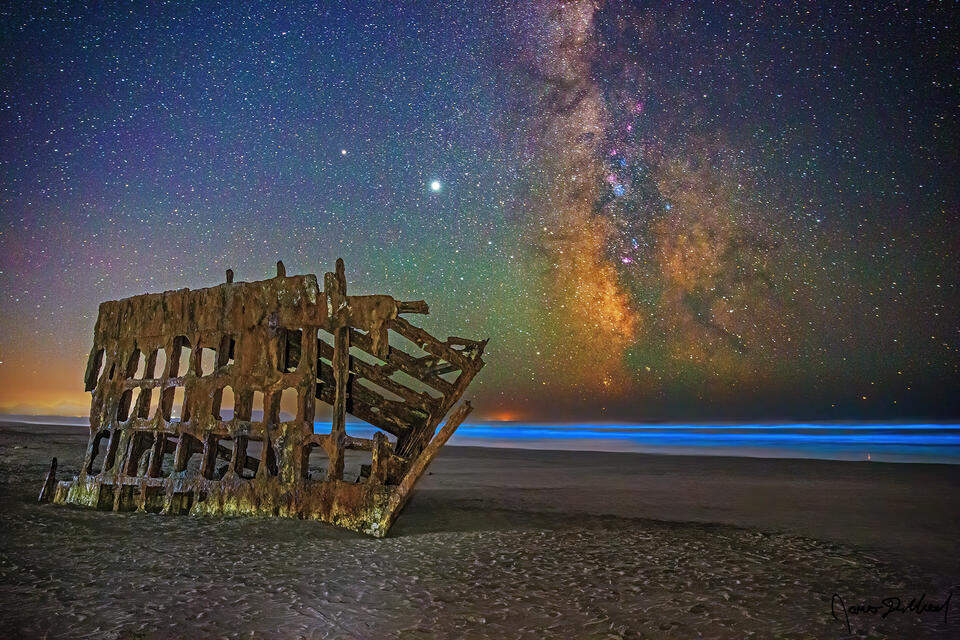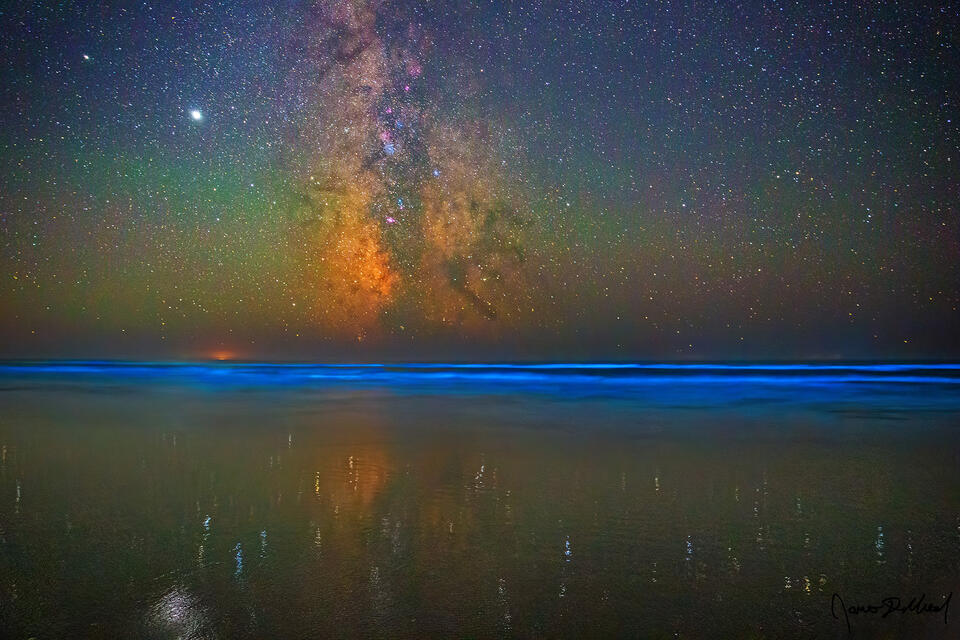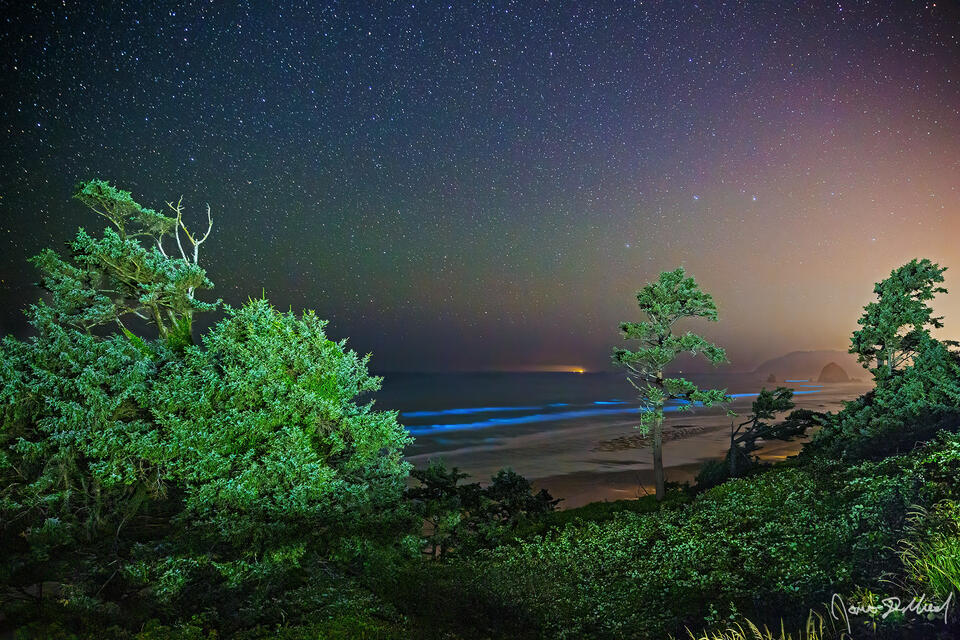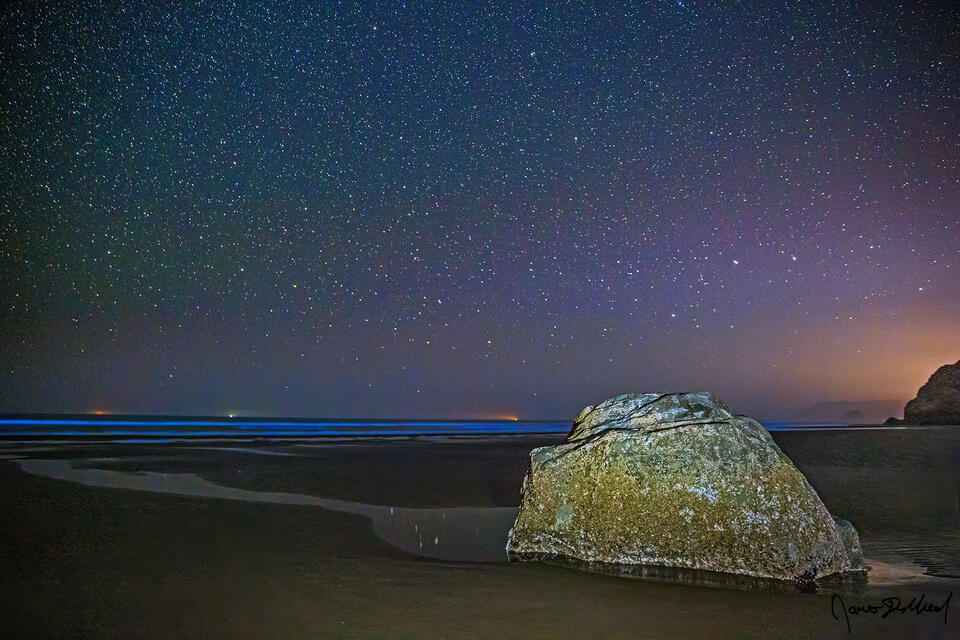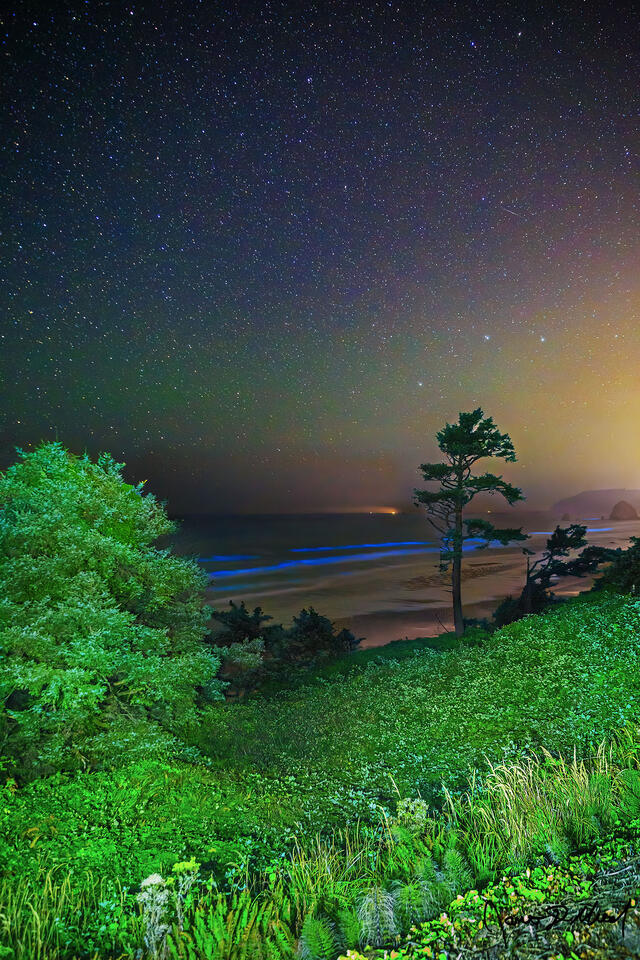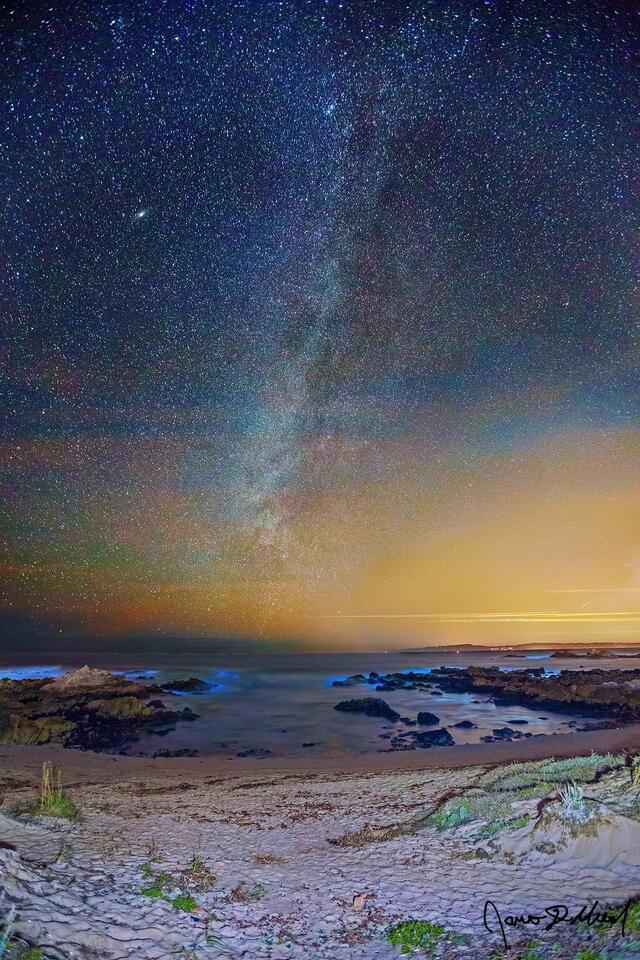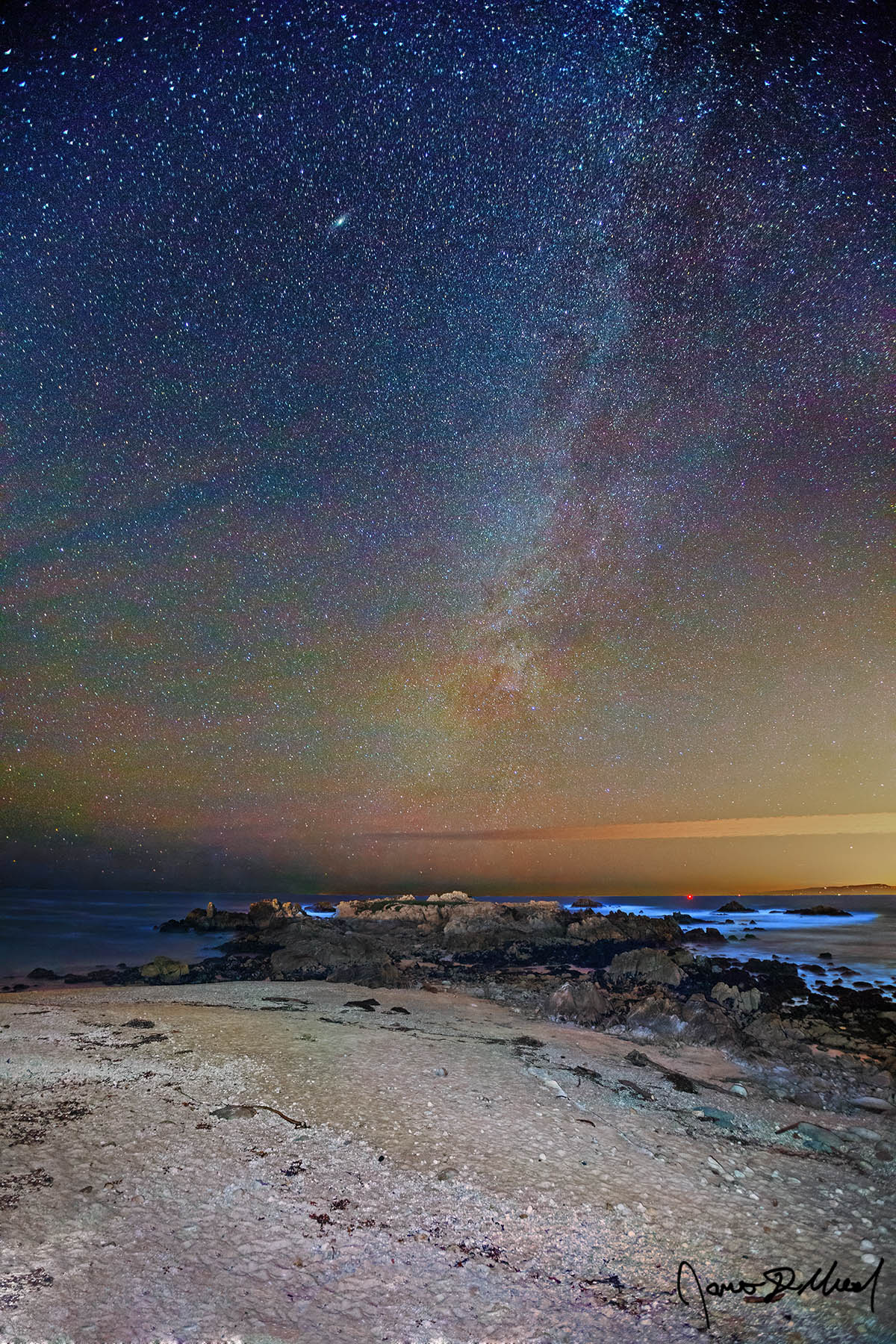
Bioluminescence, when life literally glows! It’s among the most beautiful and magical sights you'll see along the Oregon Coast and the California Coast. When the timing, weather and conditions are correct, bioluminescence occurs when living organisms are physically disturbed in the water, producing and emitting light as a result. Dinoflagellates are one of the organisms which commonly produce bioluminescence along the Oregon Coast. The glowing blue waters illuminate the waves as the roll ashore and crash against rocks. Whether it’s your first time or tenth time viewing it, seeing bioluminescence is a sight that never gets old.
I’ve spent over fifteen years over the course of my career chasing Bioluminescence on the Oregon Coast, and Pacific Coast, and over forty-six years exploring the coastline here. Bioluminescence has always been one of my favorite experiences here. It often begins to show up by late May on the Southern Oregon Coast and by late June and early July on the North Oregon Coast. Some years, I’ve seen it hang on into late September or early October. Once the cold weather and colder water begins to return, it often begins to fade out and disappear for the season. It’s more fleeting than your typical experiences on the coast and for me that’s always been part of its appeal.
When you walk along the wet sand with bioluminescence present, the sand will literally sparkle beneath your feet! Glowing sand as you walk along the phosphorescent beaches is something that always fills me with a sense of wonder no matter how many times I’ve experienced it. It makes the hike out equally as magical as the photo itself. It looks like faint, bluish purple stars in the glowing sand as you walk along the beach, and that’s by far been one of my favorite experiences in all the years I’ve been chasing and photographing bioluminescence on the Oregon Coast.
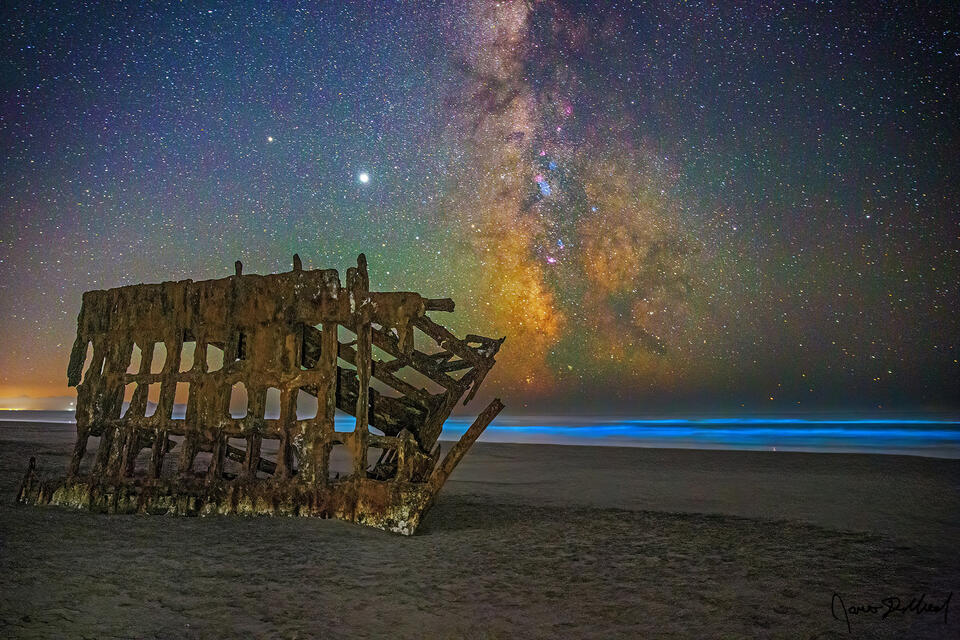
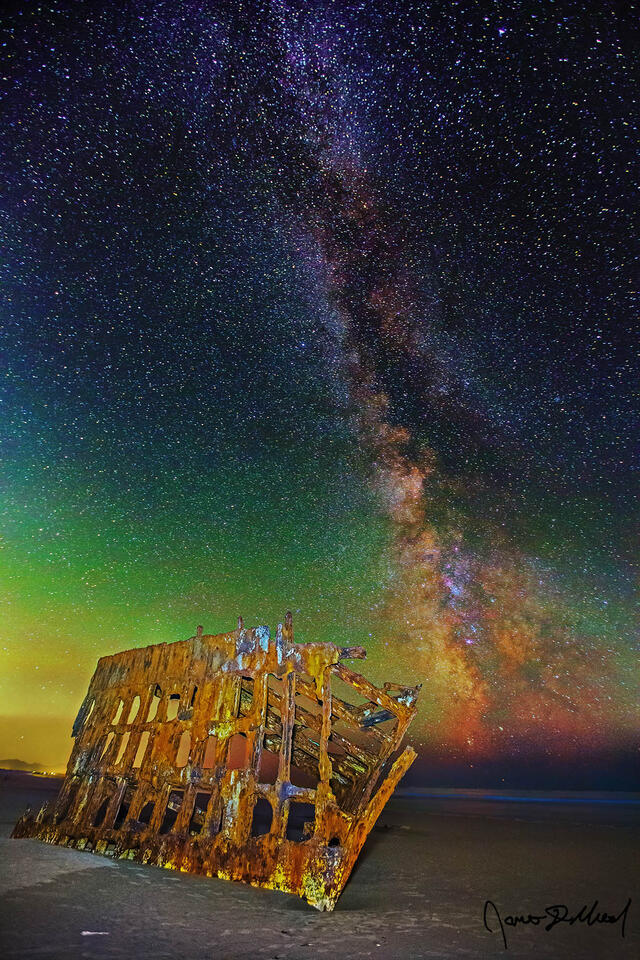
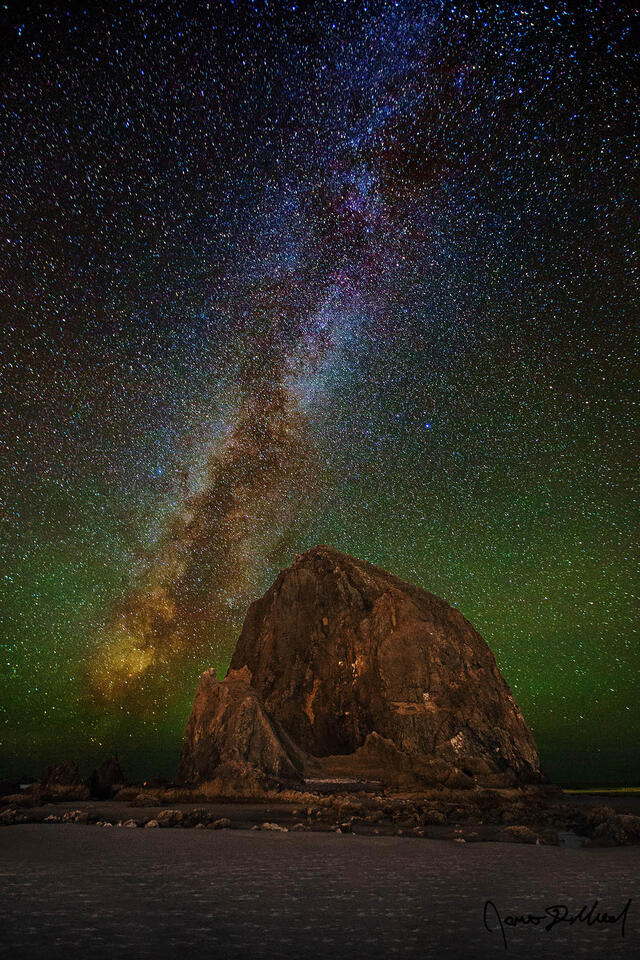
Places like Cannon Beach, Haystack Rock and the Wreck of the Peter Iredale can be stunning with bioluminescence, especially with the Milky Way rising overhead transforming scenes like this into something even more surreal and unforgettable. The more rugged coastline near Newport, Yachats and Bandon provide a different feel, but it’s equally stunning to see the bioluminescence as the ocean waves crash against the rocks and sea stacks. Bioluminescence can be hit and miss, it may make an appearance at one location one night only to disappear the next. Sometimes, it’s present in one spot but not a few miles down the beach. Dedication and patience are always important when I’m chasing bioluminescence, and that fleeting nature has always been part of the appeal for me.
I’ve spent a lifetime on the Oregon Coast chasing all the wonders it has to offer, and bioluminescence has always been one of my favorites. It always leaves me with a sense of wonder and awe, inspired by all the hidden beauty that nature has to offer. I’ve been fortunate to have been able to capture many of these moments over the course of my career, and many of these magical moments are now available as fine art prints in this gallery. I hope everyone viewing my Bioluminescence Fine Art Photography (Oregon Coast and Pacific Coast) Gallery experiences the same sense of wonder and awe that I’ve always felt here.
The Sentinel of the Spit: Documenting the Iredale
I have walked the sands of Fort Stevens for forty-six years, watching the Pacific slowly reclaim the rusted bones of the Peter Iredale. But capturing it at night is an entirely different discipline.
My coastal work is focused on the 'Restricted Light,' those rare moments when the park’s gates are closed to the public, and nature provides its own illumination. From the neon blue chemical reaction of bioluminescent tides to the ancient starlight of the Milky Way, these images are more than just long exposures; they are archival records.
Due to increasingly strict park regulations and 10:00 PM closures implemented in late 2025, these perspectives are now nearly impossible to document legally for the general public. Utilizing the Mead Method and specialized LLL (Low Level Lighting) techniques, I’ve worked to preserve these fleeting alignments before they are lost to time and regulation.
Note: Accessing the Clatsop Spit at night requires specialized 4x4 equipment and a deep understanding of the Clatsop County tide lines. Over the decades, I’ve assisted in numerous recoveries on these sands (vehicles buried to the frame rails, high-centered on driftwood at night, and more), at times working alongside local volunteers like the Sons of Beaches 4x4 rescue group. Please respect all park closures and safety guidelines; the Pacific is as unforgiving as it is beautiful.